A big caveat up front… This is a comprehensive review of all the things we have found useful, traveling with The Baby at various points of his life. Some I would say are essentials, and some are “nice to have”, and some are simply fun or out-and-out luxuries!
You can absolutely still travel and explore as a family with very little of the below. There are also lots of brands out there, some that will be less expensive than those we have chosen to use. These are the products I can personally recommend having tested them thoroughly, but there is a lot of advice out there if you want to find something at a different price point.
I try to be pretty minimal on the whole with The Baby (except for Scotland rugby kit, he needs to know where his allegiances lie, in case The Husband persuades him otherwise). It is mad how quickly he grows out of everything – toys, clothes and gadgets! We get as much as possible second hand, through local Facebook groups or second hand shops (try the excellent Joanna’s Toys if you are in the North East), hand-me-downs and lots on Vinted.
This guide is mostly about what we have found most useful whilst travelling – including our travel pram, travel cot and carriers. I have also shared a few thoughts on the things we haven’t found to be as useful. Have a look at my guide to hiking with a baby and my favourite outdoors baby kit, if you are interested in more outdoors focused kit and advice.
JUMP TO THE KIT YOU NEED THE MOST!
PRAM / PUSHCHAIR / STROLLER
NUNA TRIV NEXT
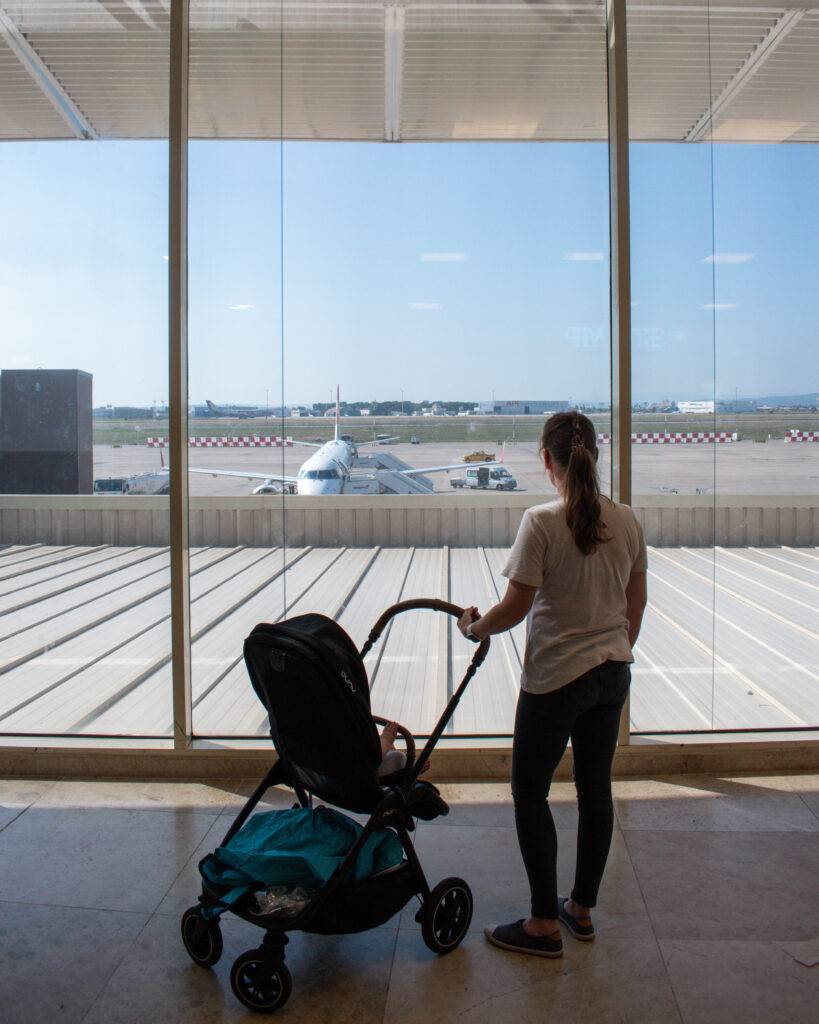
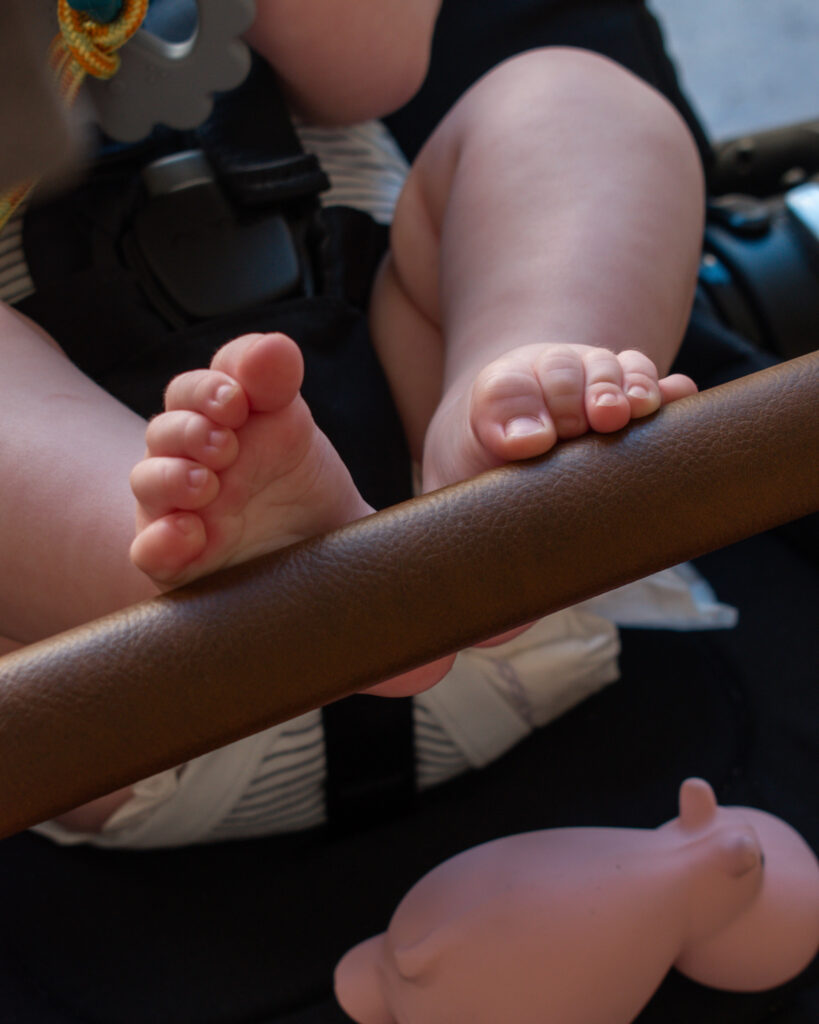
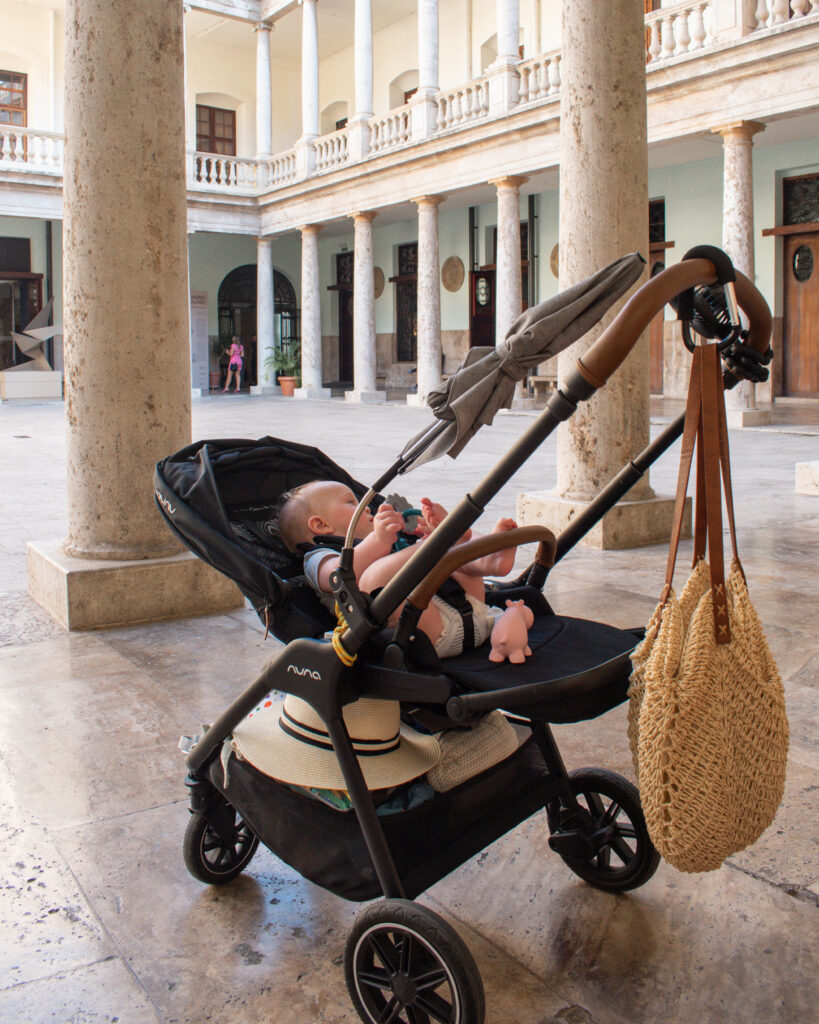
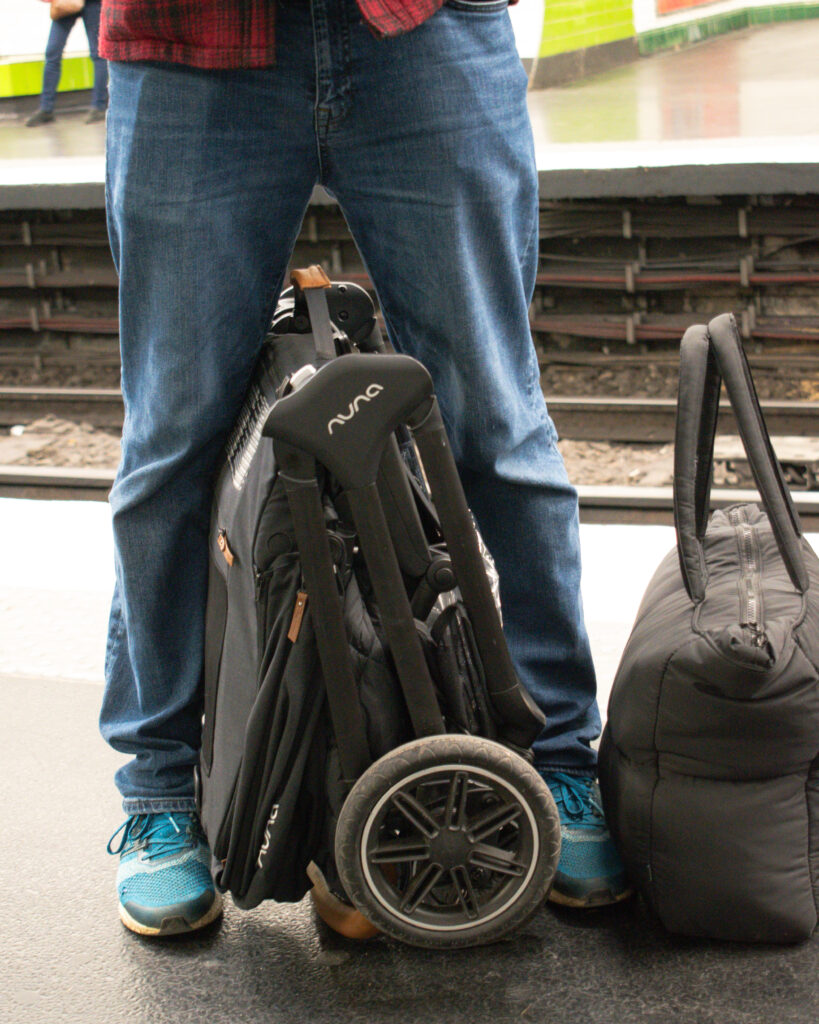
For everyday use at home, and for longer trips to stay with family and friends in the UK we use a Nuna Triv Next. This is one of Nuna’s most compact, and lightweight options. I like that it is relatively sturdy, despite being a more compact pram. Some of the super compact travel prams can feel pretty flimsy.
The pram can face both towards you, or away, and folds equally compact regardless of which way it is set up. Switching the direction is absurdly easy (much appreciated when I feel every other baby gadget requires a PhD to work out…). Once folded, it stands on its own so is convenient for tucking out of the way in a restaurant or museum.
For us, one massive advantage, was that the Nuna bassinet is rated for safe sleep, when used for occasional overnight stays or daytime naps. It is not designed or recommended for use as a permanent sleeping solution, but gave us the flexibility not to take a travel cot when away for a night or visiting family. The in-built sun shade/blackout on the bassinet is also a superb feature that I can’t understand why all prams don’t have!
On the downsides… the Nuna could definitely have a larger sun canopy/hood when in the pushchair set up. The bassinet has an excellent built in, blackout/UV panel, and yet in the pushchair configuration it is much more limited. When fully extended it provides reasonable coverage and has ventilation panels for hot days. But if the pushchair is in the recline setting, it provides very limited cover even at its most extended. Both for blackout for naps and UV protection this could be better. There are universal extenders you can add (we use a Snooze Shade), but for the price of the Nuna it is a bit annoying needing to add something. If a larger hood is an essential for you, the Bugaboo Dragonfly has the best hood in the business!
BABYZEN YOYO
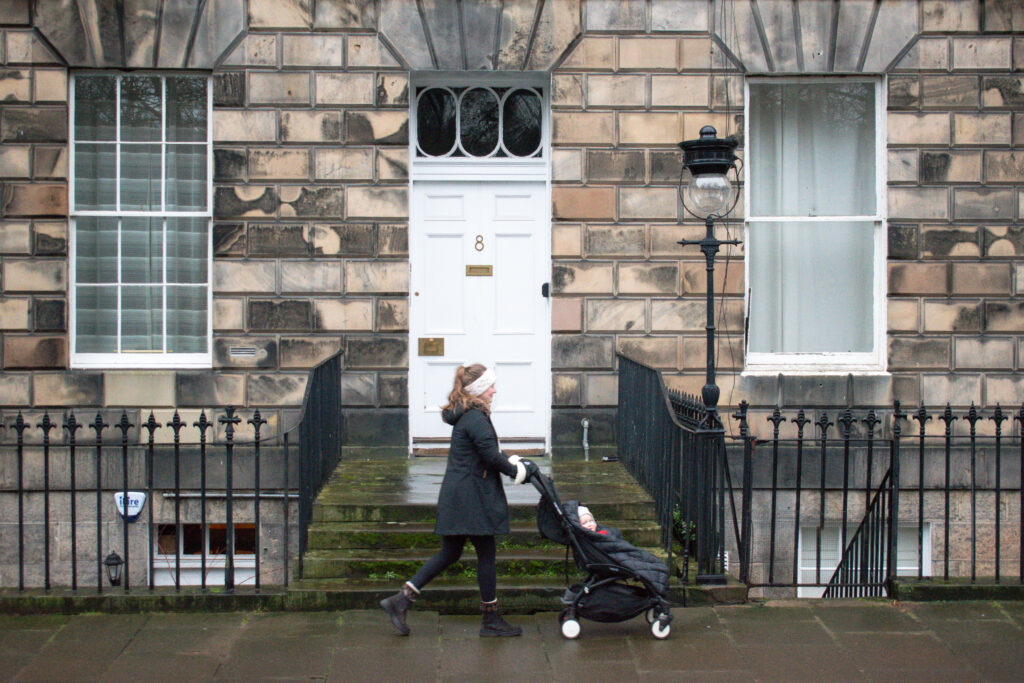
Confession time. Before The Baby was born, I thought the Babyzen Yoyo was just a bit of a fad. Everyone at the school gates in the more expensive bits of London seemed to have one, and I thought given the price in comparison to other options, it was more about showing off a status symbol, rather than the actual utility of the pram.
However, after wrestling our excellent, but less compact, Nuna on and off the Paris metro a few times, attempting to wriggle it into tiny little eateries in Valencia, and then having lunch with friends who both had Yoyos and stashed them so neatly under our table in a squeezy cafe… I was converted! Apologies Babyzen for doubting you!
We therefore decided to buy a second hand Yoyo, and have found it to be really useful for travelling. We also decide to add the parasol, which was really useful in hotter weather. It is definitely not as good as the Nuna, and feels a bit flimsy in comparison (especially on rough ground). But it is just so useful that it folds down so compactly, and is very convenient for destinations not so well set up for prams where you want to fold up and down repeatedly.
There are always lots of Yoyos available second hand – there is a group dedicated to selling Yoyo prams on Facebook in the UK. So if you think you might need a compact travel pram, there is lots of choice to save some money.
There are other pram options that fold down similarly compactly, and friends have recommended. Joolz Aer +, Cybex Coya and Silver Cross Jet 3 are the most frequent suggestions I get. As with the Yoyo, they are often available to buy second hand.
FOOTMUFF AND LINER
We have the Cybex Snøgga footmuff. I am so, so impressed with this and will rave about it to anyone who will listen. It has both longevity and versatility, as it can be used safely in a bassinet, car seat and pram. It will go on almost all prams with a five point harness – we use it on both our Nuna and our Babyzen Yoyo. Given how expensive baby items are, this is a massive benefit. It packs down to a very compact, and very lightweight, shape despite the TOG 4 rating.
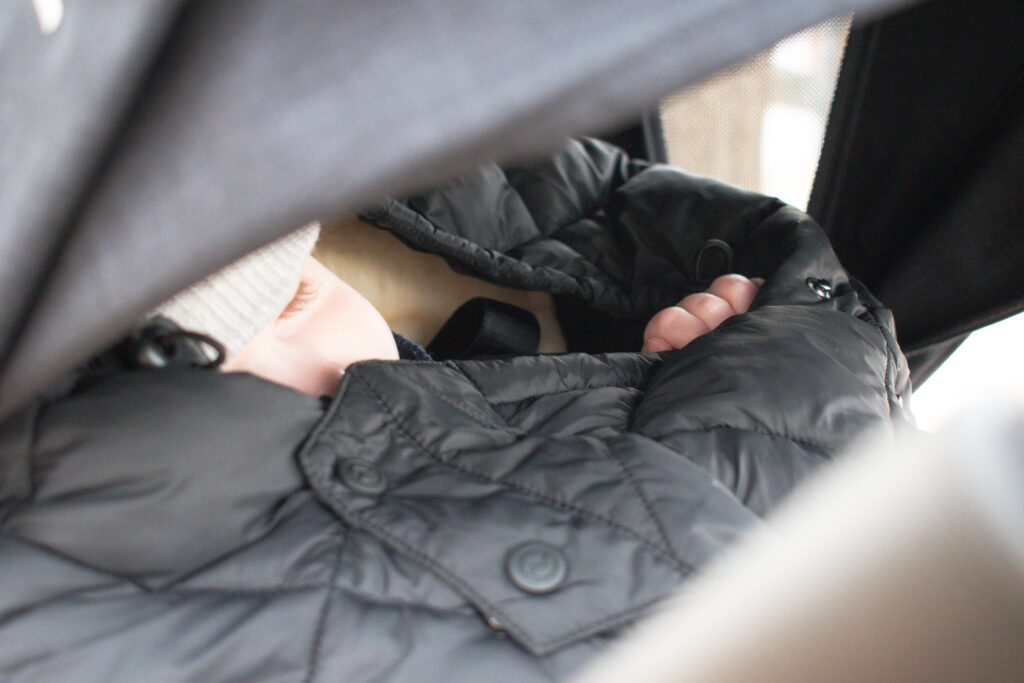
Our snuggly sheepskin liner also fits inside with no issue. We use the liner in both winter – to add extra insulation – and in summer – to help The Baby stay cool.
BABY CARRIERS
We have the Omni Breeze Ergo Baby Carrier and the Osprey Poco Plus and I would wholeheartedly recommend both! As with prams, there are always lots of carriers available second hand.
Where possible, we try to travel with both carriers, as they have advantages in different circumstances. Soft carriers fold up compactly, and don’t take up much packing space meaning they can be squished into a bag when not in use. They are also far more compact, so useful in an airport, or in a crowded museum or tourist attraction. However, they have minimal storage and the weight is rarely distributed well, meaning walking any longer distances in likely to be fairly uncomfortable.
The weight distribution in a framed carrier is generally much better than a soft carrier, opening up much greater distances. Additionally, older babies often like being higher up, which might keep them occupied for longer whilst you explore. The big downside to a framed carrier is the bulk – and often weight. They do not fold down very compactly, and the frame itself can be several kgs extra to carry around.
Have a look at my guide to hiking with a baby for the lessons we have learned and how to stay safe out and about with your little adventurer, as well as tips for comfortably using both soft and framed carriers.
OMNI BREEZE ERGO BABY CARRIER
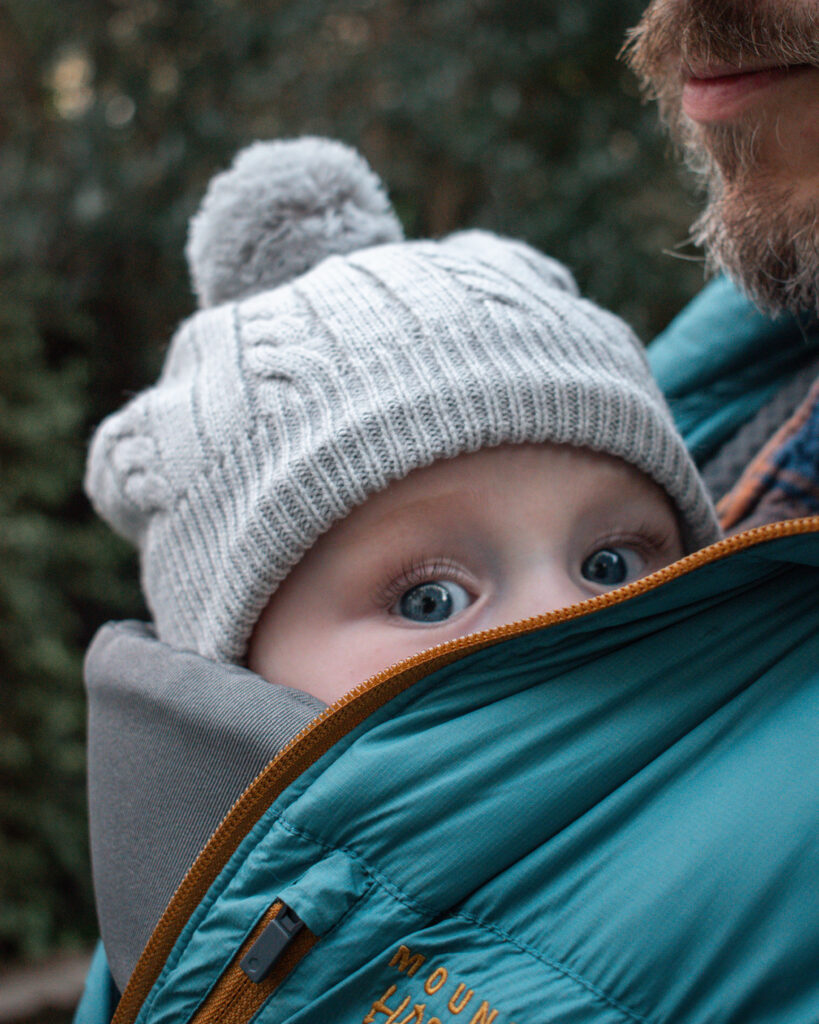
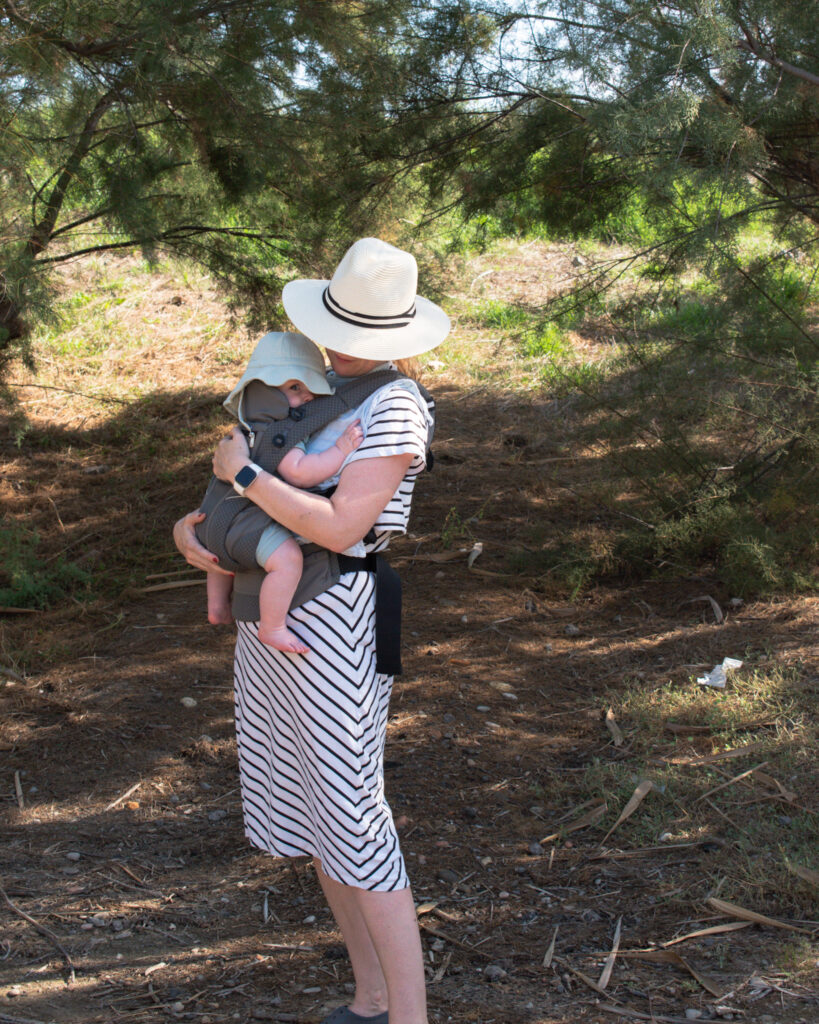
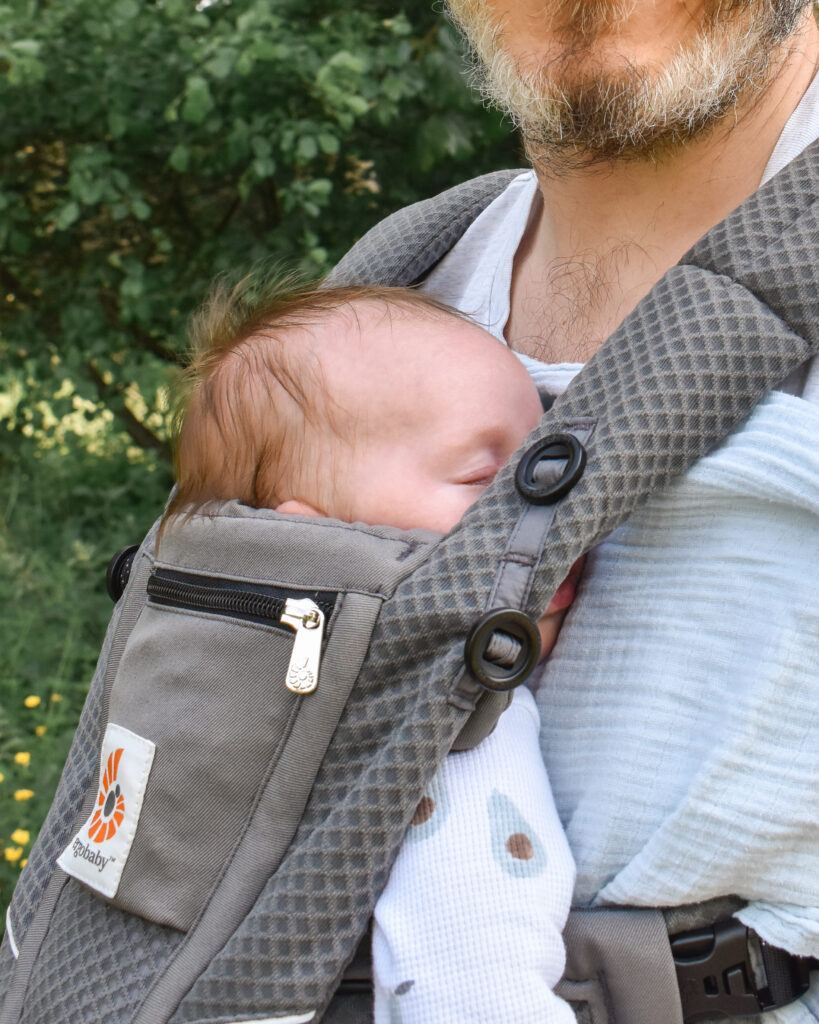
From when The Baby was only a week or so old, until he was about six or seven months, we used the Egro Baby several times a day, and I still use it several times a week now he is a bit bigger (and heavier!). In the newborn days, baby wearing really calmed The Baby, and was one of the few things that guaranteed a bit of sleep. Once he was a bit more robust, and I had recovered sufficiently physically, it allowed us to get out on walks that the pram could not manage. It was also brilliant around the house for having spare hands to get lunch or tidy up.
We chose the Omni Breeze as it is the most breathable model Ergo Baby have, and we knew we would be using it mostly in the summer. Even though The Husband and I are vastly different sizes, we both found the Omni Breeze comfortable, and can adjust it to suit our different frames. The Ergo Baby comes with a built-in sun shade (that will also withstand light rain), and has a detachable zip pocket and reflective strips.
OSPREY POCO PLUS
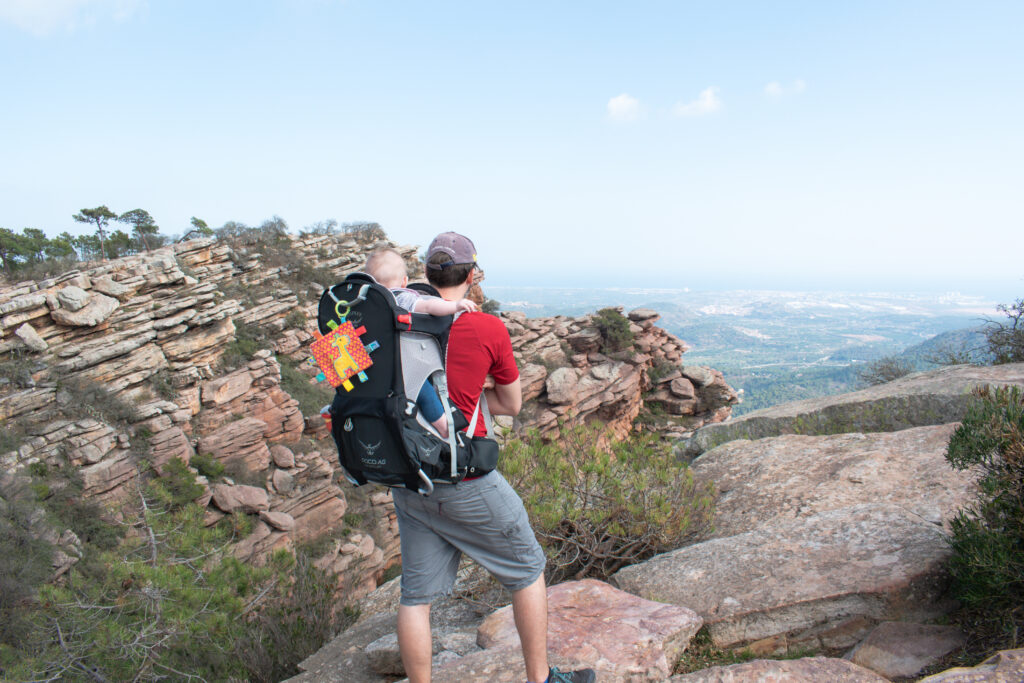
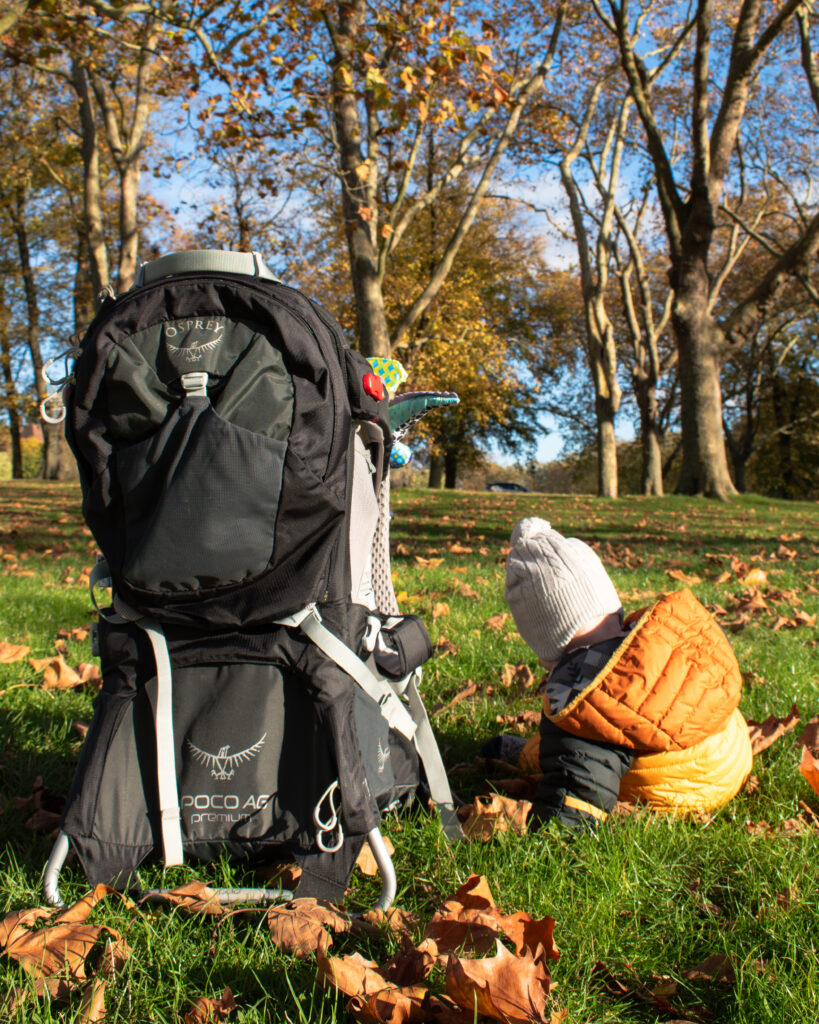
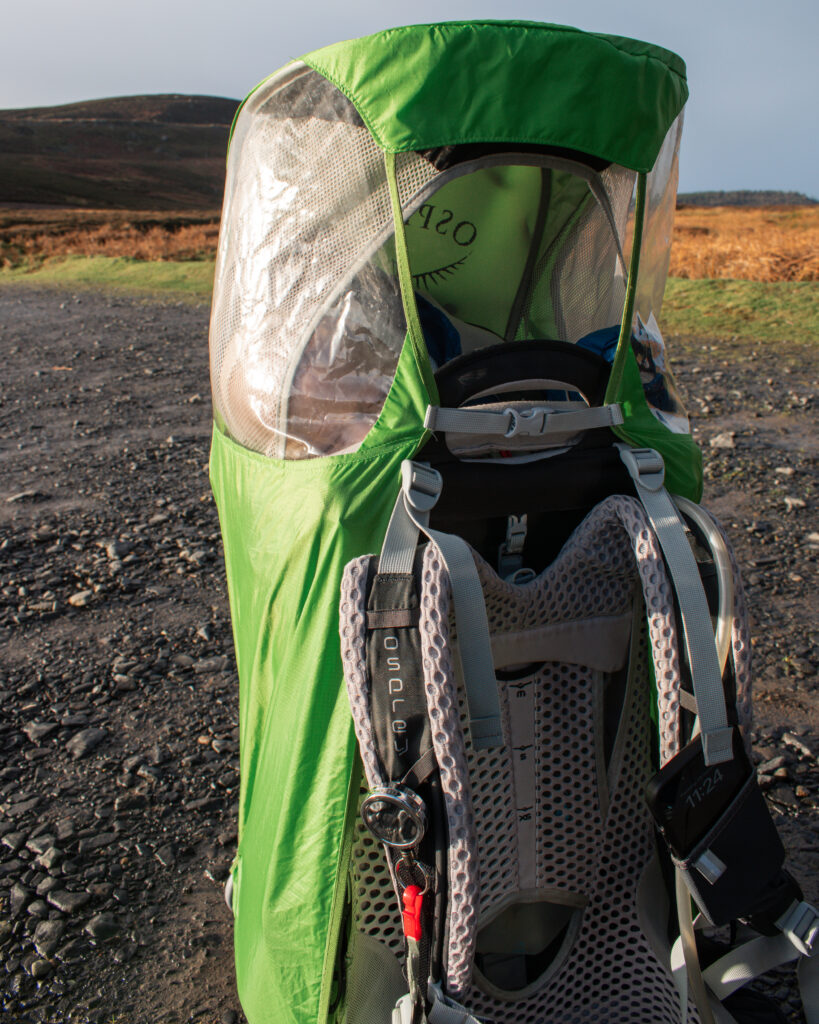
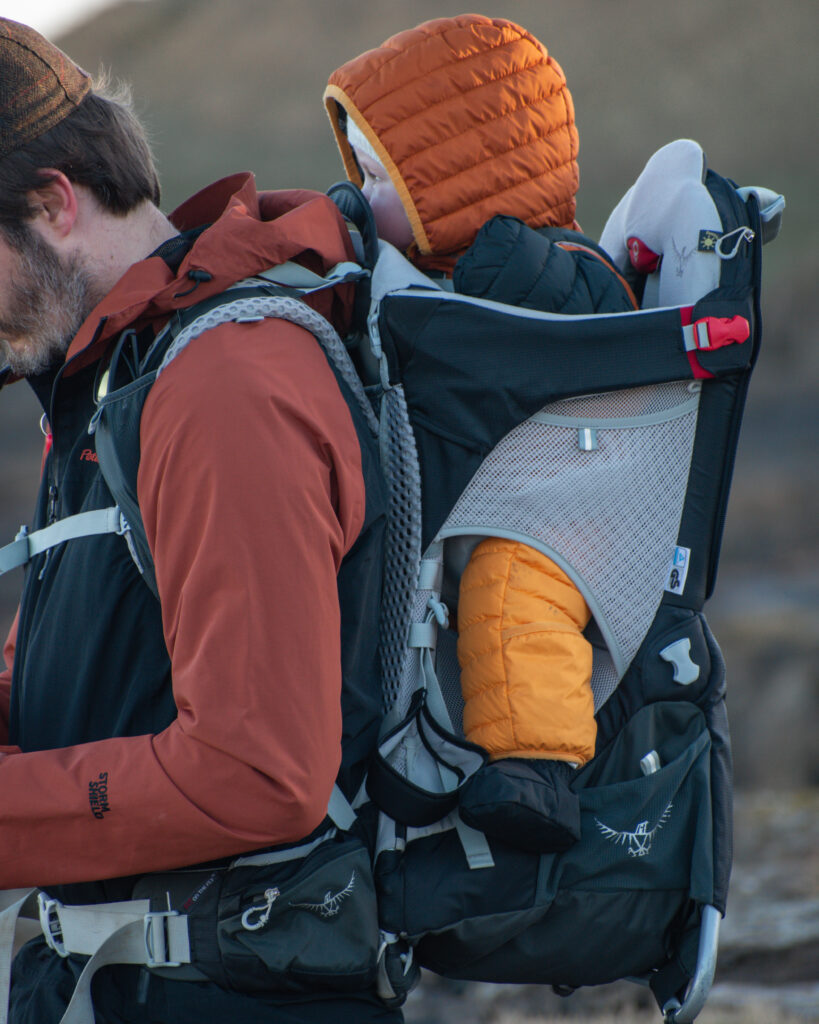
Once The Baby could sit independently, we started taking him out in the Osprey Poco Plus (a very, very much appreciated hand me down! Thank you W & G!) The “Plus” has 26L built in storage space, a retractable sunshade and a waterproof rain cover. The “non-Plus” model, has 20L built in storage. As with the Ergo Baby, the Osprey Poco Plus is super adjustable and fits both The Husband and I well. The backpack-like design ensures that the weight is effectively distributed across your hips, making longer distances more manageable.
We have the Osprey Poco Plus which we absolutely love. It is very easy to adjust to fit both my husband (6’3”) and me (5’2”) comfortably. We have also tried out a few carriers that friends use. The Phil and Teds Parade folds down flat, making it much more compact for travel. But not having much head support meant naps on the go weren’t really viable for us, and we need a rain/sun cover given the type of hiking we wanted to do. Likewise, the Deuter Comfort Active is much lighter than our Osprey, and folds down well. But is similarly expensive as the Osprey and doesn’t have the same amount of storage or sunshade, so we felt the Osprey offers better value.
TRAVEL COT
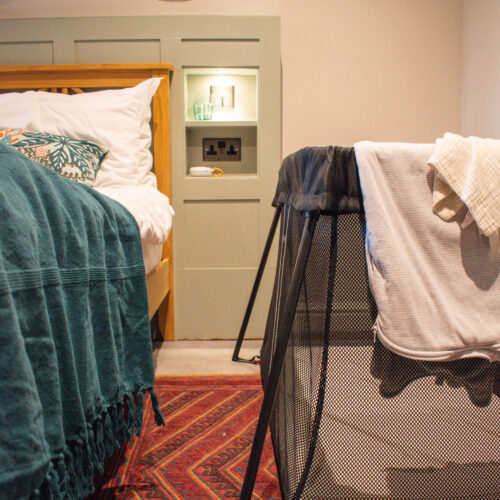
We spent ages deciding on a travel cot, as there are just so many options out there! We eventually settled on the Baby Bjorn Light. It was a bit of a splurge, as it is certainly more expensive than other options. Unfortunately, we couldn’t find a second hand option within collecting distance (just note – if buying a second hand cot, the safety advice is to always buy a new mattress). However, it was consistently rated as having the most comfortable mattress and as we hope to be using it frequently, and hopefully for several years, we thought it worth the investment.
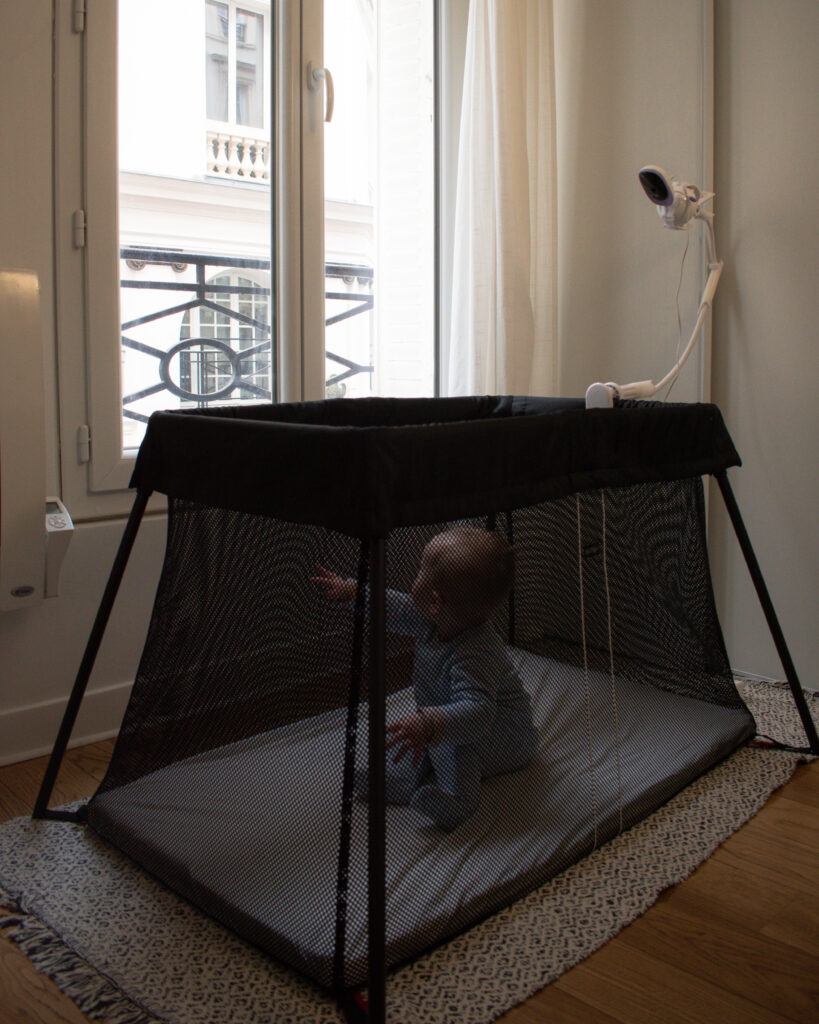
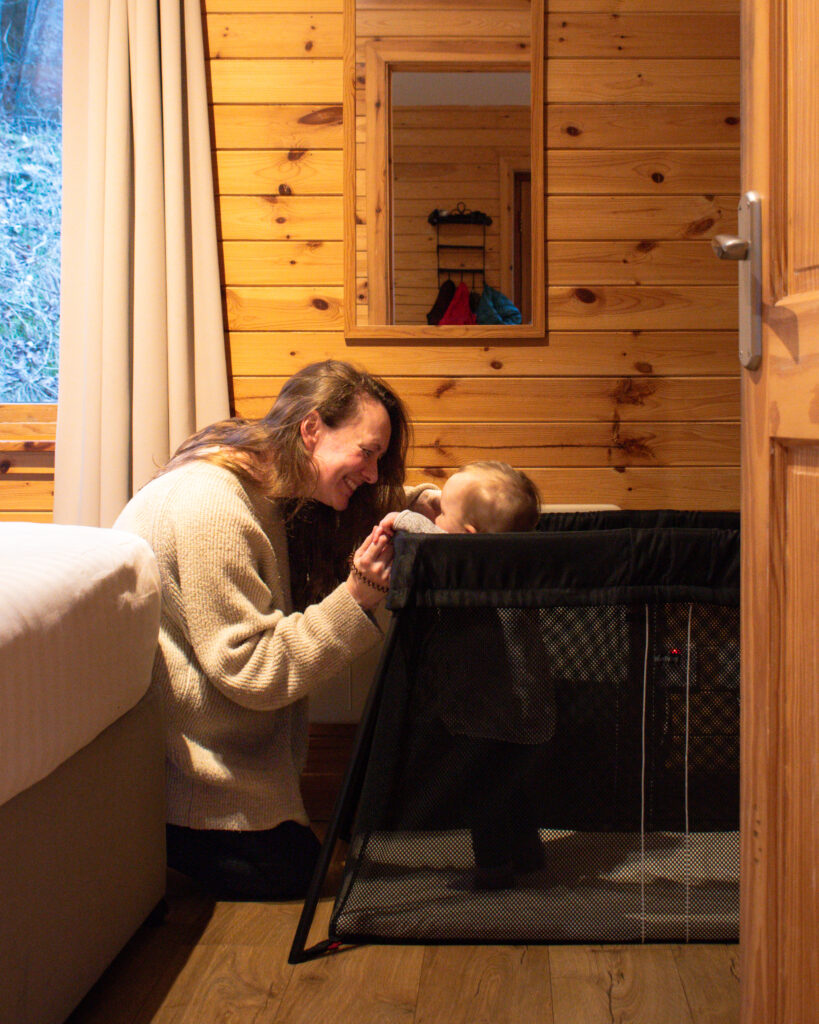
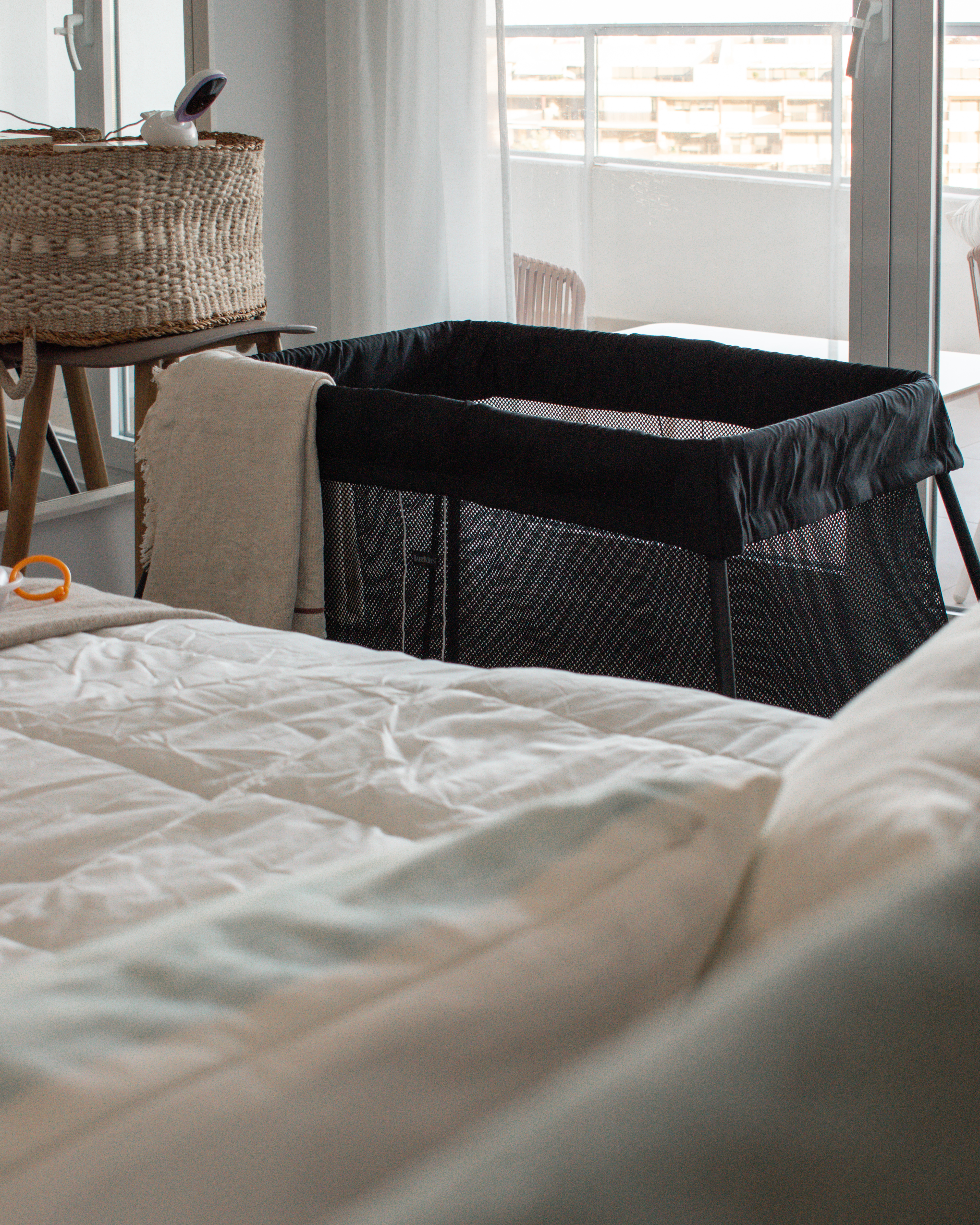
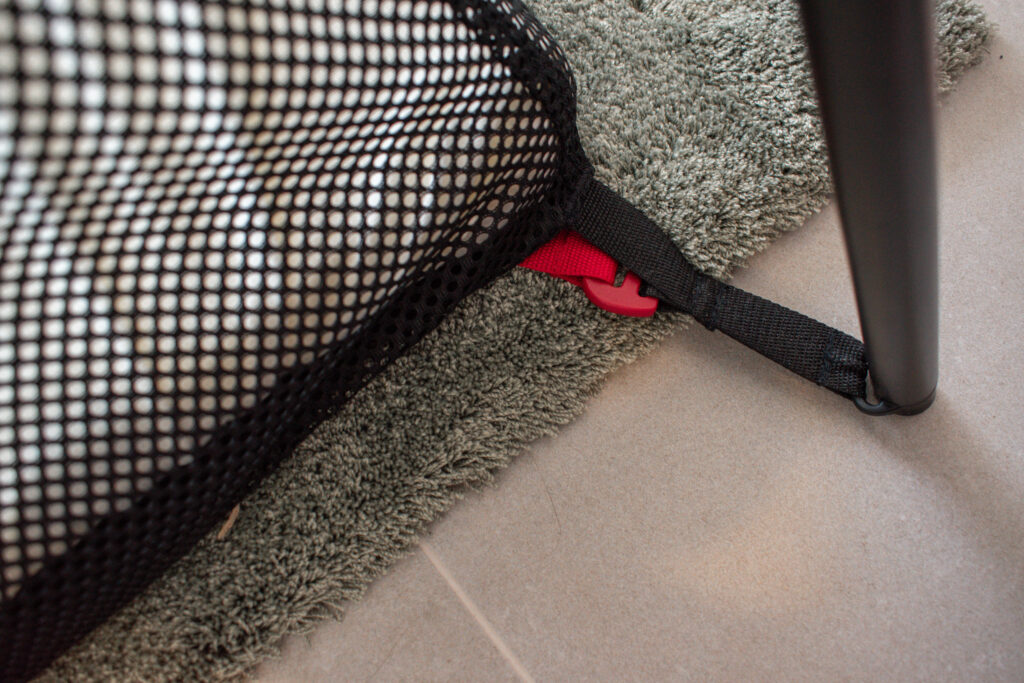
Having tested it extensively now, we definitely recommend it. It is incredibly easy to put up and fold away, and the mattress is much thicker than others we have tried. The Baby sleeps just as he does in his ‘proper’ cot at home, whereas with others we have used he woke more frequently, possibly due to the thinner and less supportive mattresses. This included a six week extended trip, in which he slept in the Baby Bjorn every night. In addition to comfort, I think the mattress offers better insulation given travel cot mattresses are nearly always on the floor. It folds away to a pretty compact, lightweight (6kg), shape and we have found it ideal for travel. The fabric is machine washable, and OEKO-TEX Standard 100 (meaning it is safe for sensitive baby skin).
The one downside to the Baby Bjorn Light is that it does not come with a bassinet option, which when The Baby was tiny, he definitely needed.
The other options we considered were the Silver Cross Slumber 3 in 1 and the Bugaboo Stardust – both of which have rave reviews from friends.
TRAVEL HIGH CHAIR
This is another item I was insistent that we did not need. And then we spent a week trying to feed The Baby at a cottage, three meals a day, sat on one of our laps. And I vowed never to subject us all to this stress again!
So having not wanted to buy a travel high chair… we now have two! One mini camping chair with tray and a harness, and also the Chicco Chairy Children’s Booster Seat. Both can be attached securely to a chair, so The Baby can be at the table with us. Both also fold down, but the mini camping chair collapses in on itself more compactly than the Chicco seat.
However, as the camping chair is not rigid, it is harder for The Baby to sit up in to eat (older children, perhaps 12 months+, would find it no problem). As the Chicco is plastic, it is more robust and studier for The Baby to sit it and eat. The trade off is of course, that it does not pack down as compactly and is heavier.
We use the Chicco for longer road trips, when we can pack more as it is more effective as a high chair for frequent use. But we also ended up keeping the camping chair as we felt we will get long term use out of it for camping trips as it will still work once The Baby is a toddler, and given it folds down far more compactly.
BABY TRAVEL SLEEP AIDES
In the never ending search for the magic formula that ensures the elusive baby sleep happens, there are few things we have found to be invaluable when we are travelling.
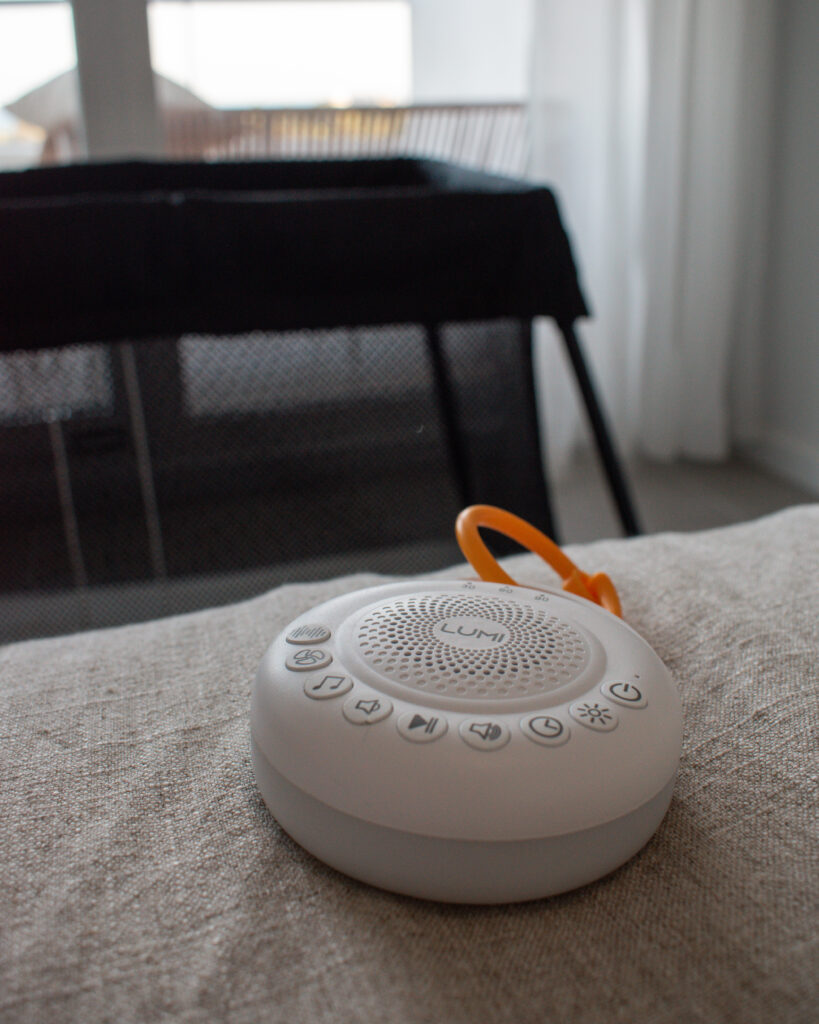
What Noise Machine – a portable, rechargeable white noise machine has been a bit of a game changer for sleep for us. Giving The Baby a consistent sleep environment has made a huge difference to how he settles where ever we are. This is especially helpful when we are sharing a room in a hotel, as it can help mask the noise of us, and reduce the chances we wake him.
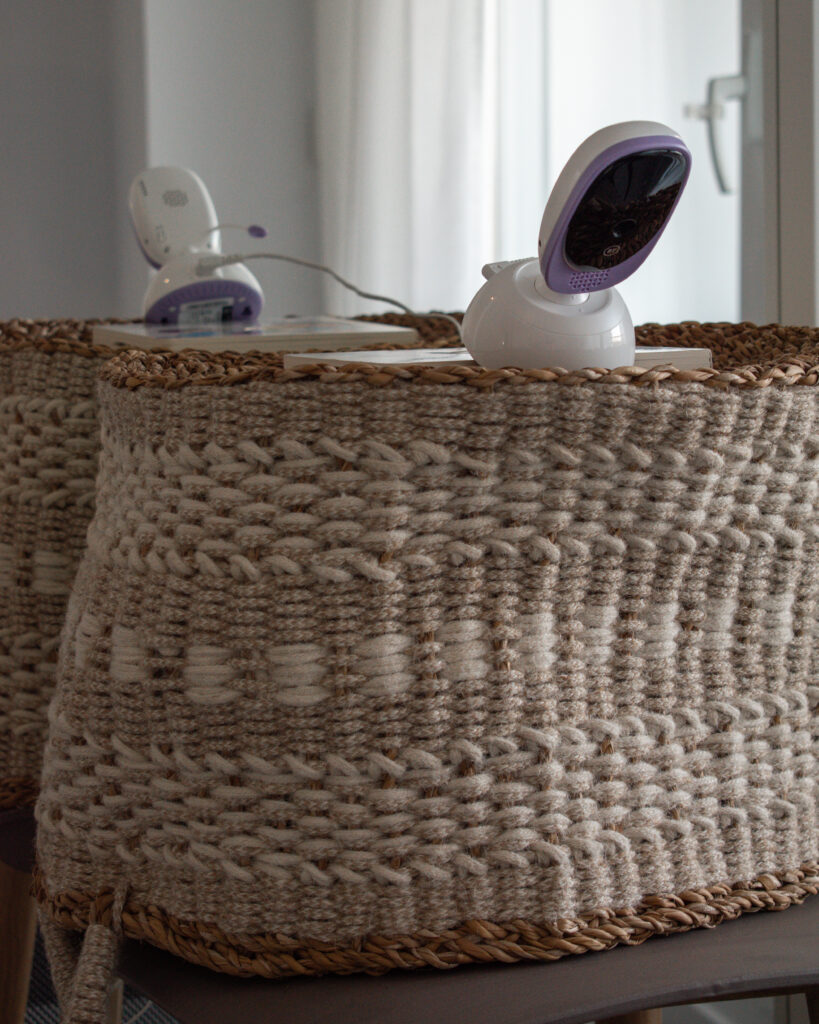
Non Wifi Baby Monitor – a non wifi baby monitor (we use a BT Monitor) means that you do not need to worry about an internet connection to ensure your monitor works. We had to get a monitor holder as the angle of our BT Monitor is such that it was tricky to set up with the travel cot. It has been great for what we needed it to do, but I am sure there are also monitors out there that could be used without needing an additional holder.
MISCELLANEOUS
Microwave sterilising bags – these are game changingly easy! At home we have an excellent microwave steriliser, but it is too bulky to take with us. The bags take up barely any space and can be reused 30 times to sterilise breast pumps, bottles and other baby items. There are multiple different brands and prices available. We also find the MAM Self Sterilising bottles to be very useful for travel (and at home) given the simplicity of ensuring they can be easily sterilised. Where we won’t have access to a microwave, we use Milton tablets to sterilise essentials.
Travel fan – we have found that a pram fan with a very flexible attachment was most useful as we could attached it the pram or cot, or just on a table next to The Baby when needed.
Reusable swim nappies – The Baby is a real water lover and I love, love, love the fun prints of the TotsBots nappies.
Wet bags – useful for cloth nappies, but also for dirty clothes out and about and wet swimwear, and generally anything you want to contain!
Fold up Picnic Rug – makeshift playmat, changing mat, place to sit and feed, eat… this compact picnic rug with waterproof backing was a regular feature of our pre-Baby packing, and it has continued to be just as useful!
Sunshades – although some car hire companies offer sunshades, it is not a guarantee. These sunshades take up so little room in our luggage that we always pack them. I also really appreciate that it is possible to open the window to get some ventilation whilst keeping The Baby out of the direct sun.
Medicines – The Baby really struggled with teething, so painkillers are a travel essential for us. I find these Calpol sachets very useful for travel (and to keep in my purse day to day) as they are already in the right dose, and much easier to pack than a glass bottle filled with liquid. On longer trips I also pack a vapour plug in, as we have found it invaluable when The Baby has a cold.
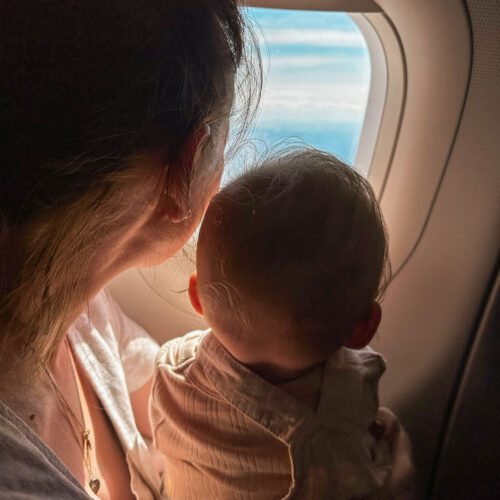
Toys that travel! – my favourite tip is to keep favourite (easily portable!) toys out of the way a few days before travel to crack out on the train or plane. Also always travel with the big guns… in our case, Gidros the Dragon, Henrietta Hippo and the spoon (I can’t explain this one, he just loves it!). In addition to these favourites, before his first flight we also bought him this sensory toy, which proved to be perfect for having multiple textures and ways to explore, and possible to hang off the seat in front. It has become a firm favourite. As have the spinners we bought based on the recommendation of nearly everyone we know! In addition to sticking to the plane window and fold down tray table, they are also now his nightly bath toys and useful for sticking to a high chair tray to buy myself sometime whilst trying to cool his dinner down…! Likewise, these super packable suction toys have been very popular at home and on holiday, as have these versatile silicon animals.
THINGS WE DON’T PACK FOR TRAVEL WITH THE BABY
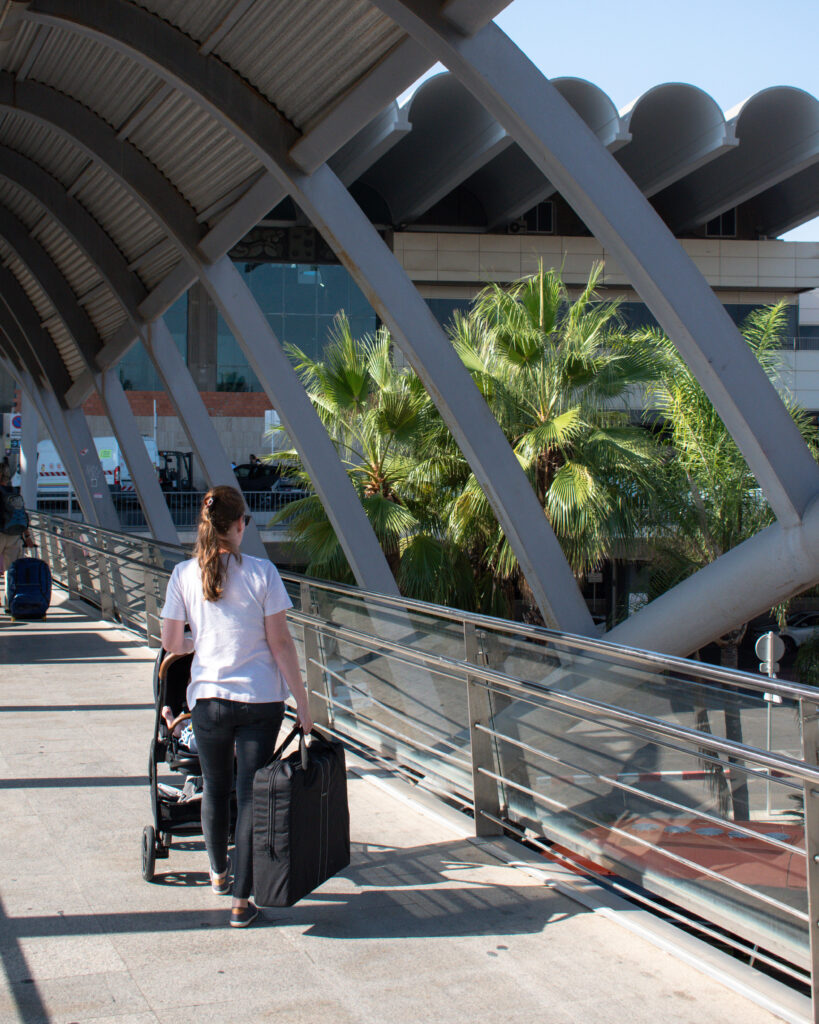
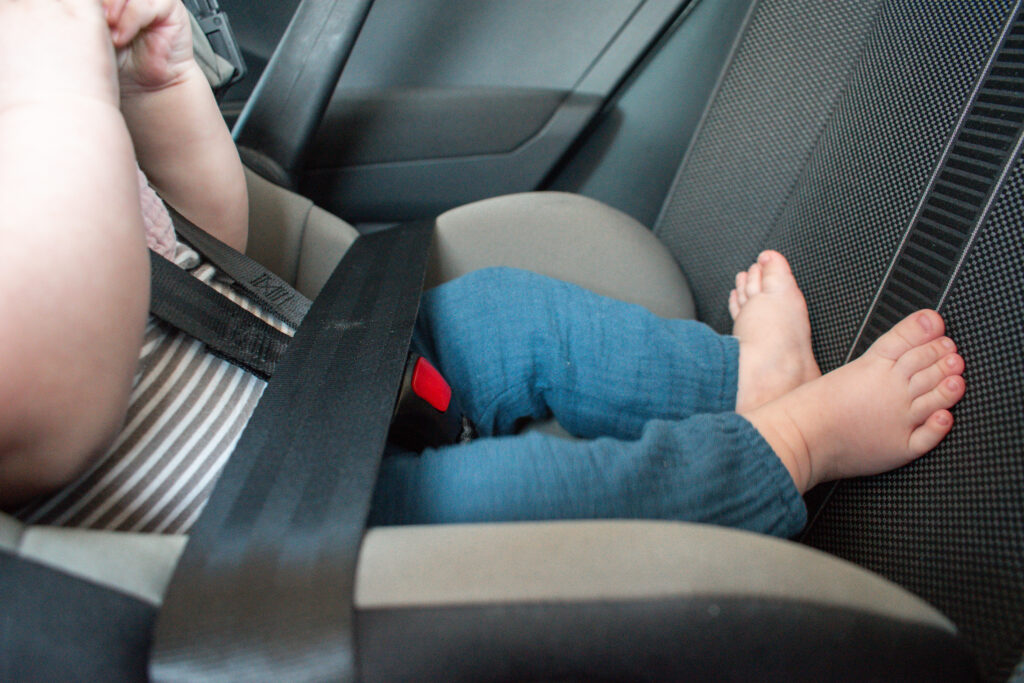
Car Seat – unless we are travelling in our own car, we do not take The Baby’s car seat. Instead, we rent one if we are hiring a car. It does add a bit of cost, but on balance it makes most sense for us. Most airlines will only permit two free baby items to be checked in, and for us, it usually is most useful for this to be the backpack carrier and travel cot. If travelling by train, the car seat is super bulky and awkward to carry and store on top of everything else.
Nappies – if traveling by plane I tend to sneak a pack into the bag we check the carrier in with, as it can be checked in for free. (We use this bag, and to date it has kept our Nuna pram and Osprey carrier well protected. I’d recommend a coloured bag as its easier to spot in luggage halls amongst all the other black options!) Otherwise, I simply pack enough for a few days and then buy them on arrival as nappies are widely available almost everywhere.
At home we use the gorgeous Bear Bott reuseable nappies, but usually use disposables for travel days and if we will be travelling around a lot. I would really recommend listening to this podcast if you are debating which nappies to use. The environmental impact was not a straightforward as I had expected, so we decided we were personally comfortable being flexible when travelling with disposables.
Travel blackout blind – initially, we took a travel blind with us when travelling but after a few trips decided to instead just use a towel or blanket from the hotel or apartment when we needed something in addition to the curtains already there. This has worked well for us, and has meant one less thing to pack. However, if you remain unconvinced, this is the travel blind we have, and it is very good. It sticks to windows well, and cuts out almost all of the light.
A baby monitor – despite what I said above, occasionally instead of a monitor, we use one of the apps that allow a phone or iPad to function as a baby monitor. However, these are reliant on Wifi, and having two devices (one to act as the camera and one the monitor).
Baby Bath – aside from buying a cactus print inflatable bath in a supermarket in Spain (The Husband was adamant we needed it…), we don’t usually bother with anything specific for bathing. We were given a Stokke travel bath, which we took with us on a month-long road trip around Scotland. It worked well, but for us, this is usually somewhere we can cut down on luggage. When The Baby was tiny we just made do with a sink or bucket! As soon as he could sit, we got a small sticky bath mat, and use that. The sink is still a frequent feature of our holidays though as many places only have showers and currently The Baby seems to have decided that having a shower is horrifying!
You certainly do not need all of these things to travel with a baby, but hopefully what has helped us might have given you an idea of the things that will make your own explorations easier! Be sure to have a look at my other family travel guides for more practical advice – as well as my destination and adventure series for choosing where to head with your little explorer!

Leave a Reply