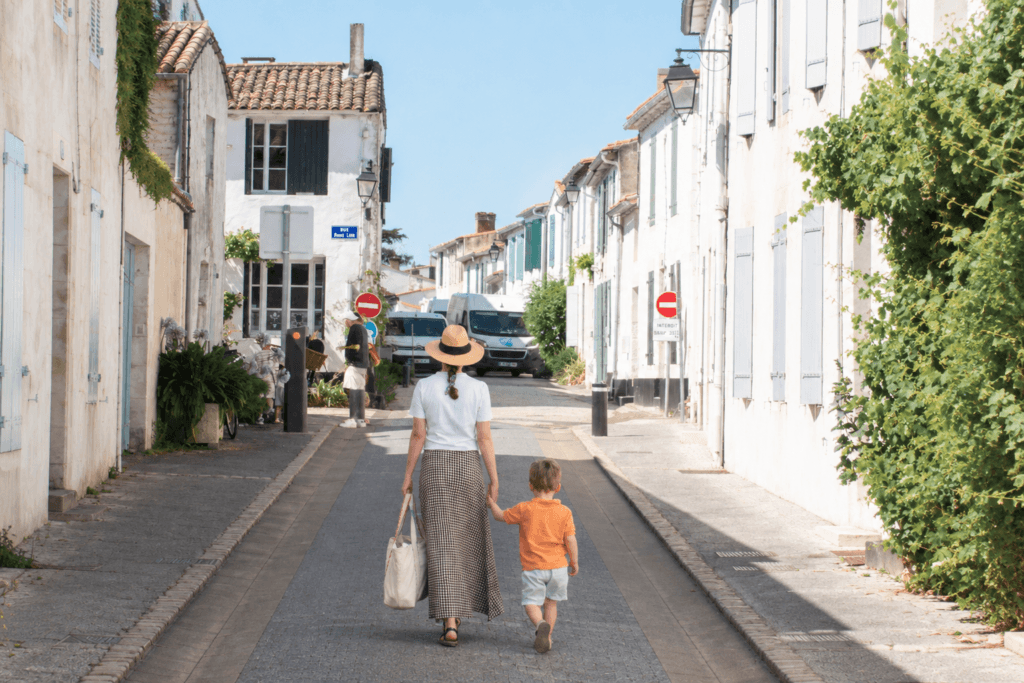
Wild Atlantic beaches, ridiculously pretty villages, bicycles everywhere, medieval markets, oyster shacks and quite possibly the most extensive ice-cream menu in France. Île de Ré is pure delight.
For families, particularly those travelling with younger children, Île de Ré works brilliantly. It is flat, compact and extraordinarily easy to explore by bike, with huge sandy beaches, markets, playgrounds and pretty villages never very far apart. We found it one of the easiest places in France for a relaxed outdoor family holiday.
I have travelled extensively all over France. Almost every summer holiday as a child was spent in L’Hexagone, and as an adult I have continued to visit almost every year, and often multiple times a year. I even lived in Paris (read my comprehensive guide for all the best tips!) for a period. And yet, despite knowing France so well, within a few hours of our first visit to Île de Ré I was utterly baffled as to why I hadn’t been before. We fell spectacularly in love with the island. Often referred to as the “French Hamptons”, it is an effortlessly relaxed, upmarket destination, and yet still retains an unpretentious atmosphere that makes for a wonderful family holiday destination.
There’s something irresistibly appealing about becoming the sort of people who “summer on the Île de Ré.” You can practically hear the phrase being dropped casually into conversation over a glass of rosé. So, consider yourself warned… spend a few days cycling between whitewashed villages, buying oysters at the market and lingering over lunch by the harbour, and you may find yourself wondering whether one summer here is really enough.
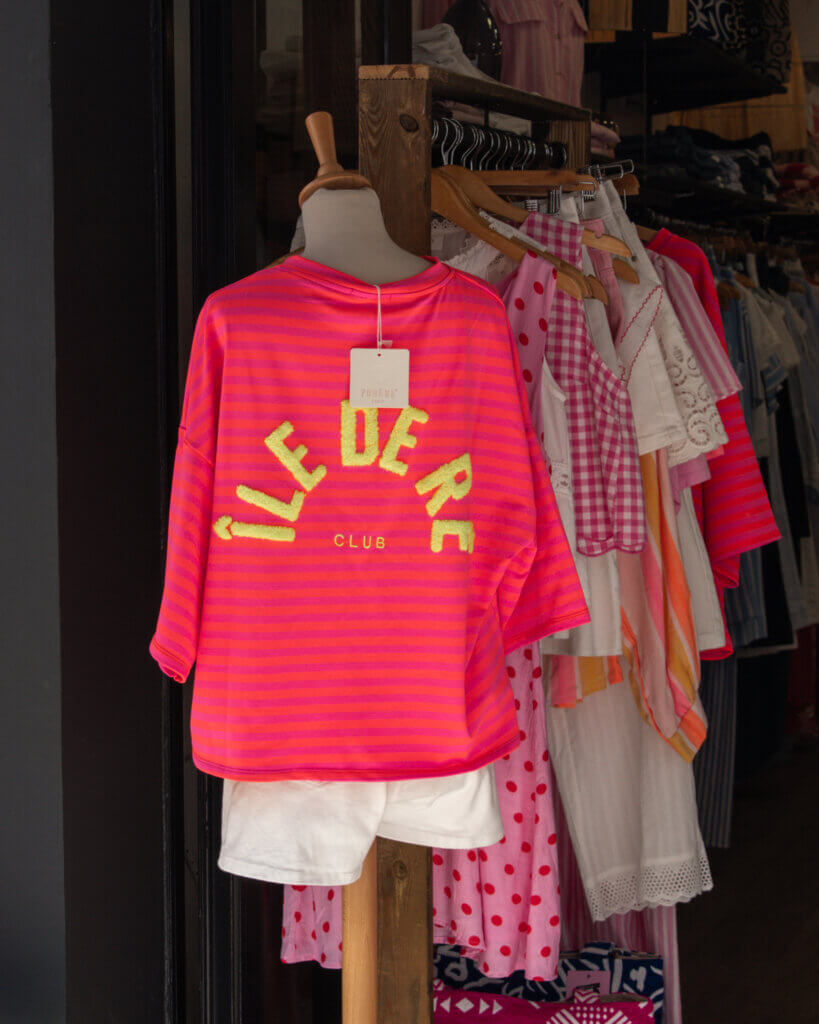
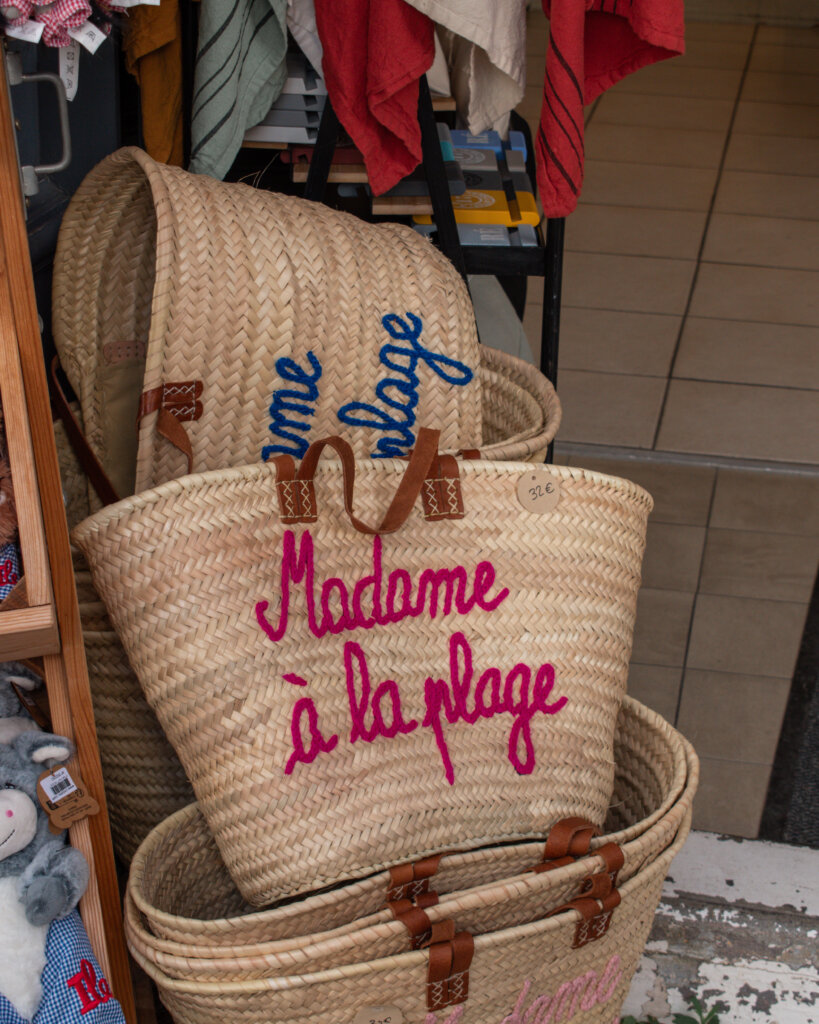
And despite its reputation for polished French holiday chic, it has never felt particularly showy to us. The island has plenty of beautiful boutiques and smart restaurants, but its greatest pleasures are pleasingly simple: cycling somewhere for lunch, buying fruit at the market, watching tractors trundle through oyster beds at low tide, climbing a lighthouse or spending an afternoon on an almost-empty stretch of sand. Parts of Île de Ré actually remind me of my beloved Northumberland — big skies, windswept beaches, dunes and that slightly wild edge you get along the Atlantic.
This is a comprehensive guide to the places I love, the things I prioritise on return visits, and a few spots I probably wouldn’t rush back to with younger children.
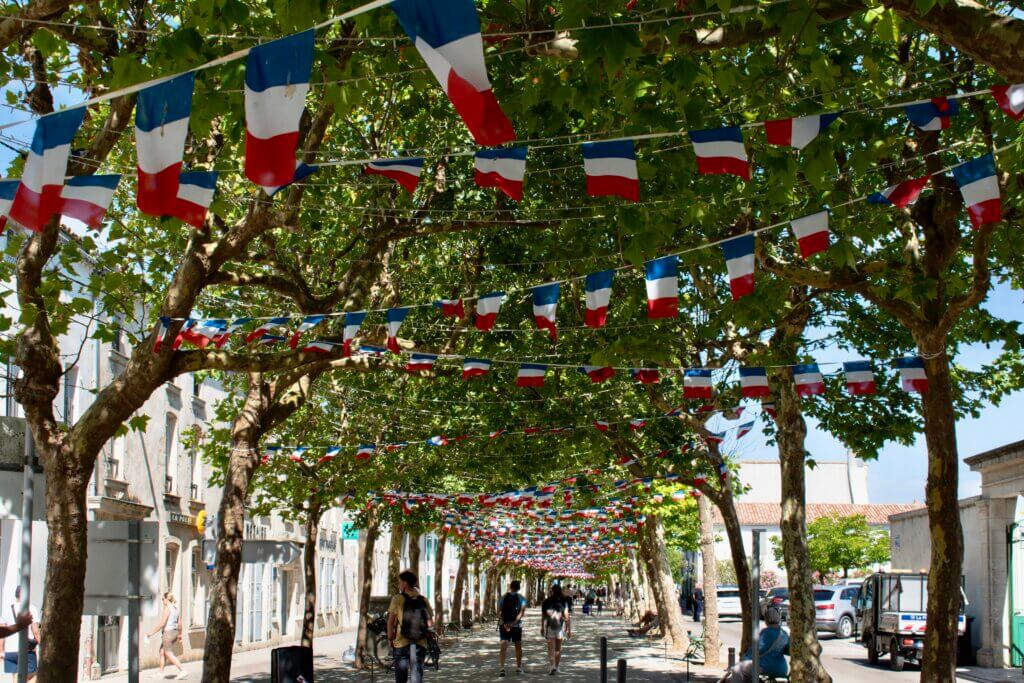
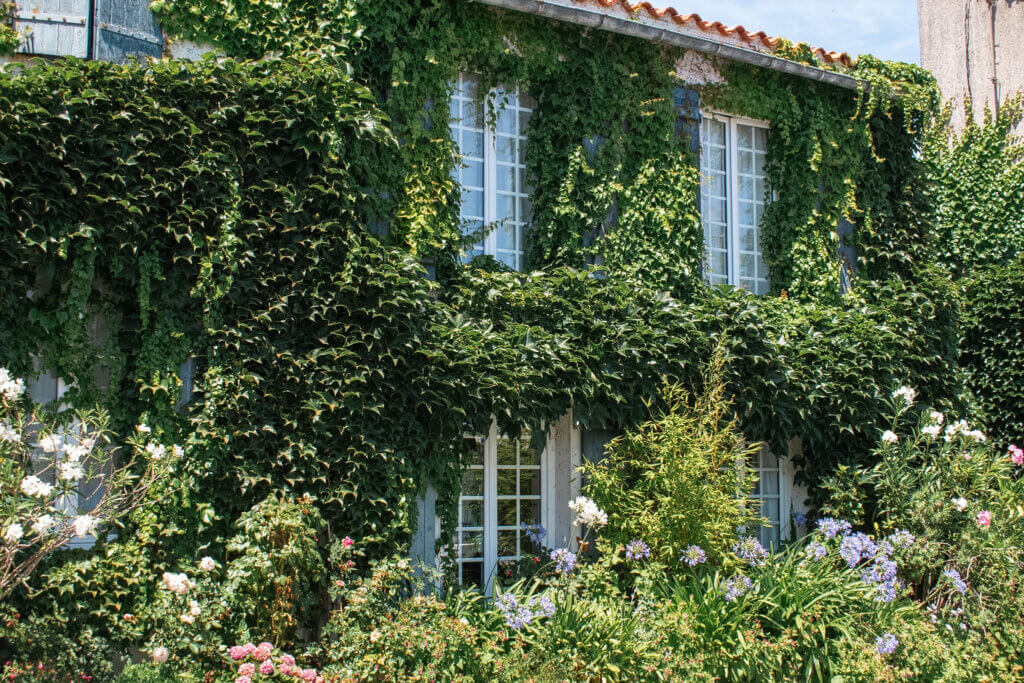
ÎLE DE RÉ AT A GLANCE
Best for: Cycling, beaches, food, pretty villages and relaxed family holidays
Best villages: Ars-en-Ré and La Flotte
Best beach: Plage de Trousse-Chemise
Best family activity: Exploring by bike
Best view: Phare des Baleines or the Clocher Observatoire in Saint-Martin-de-Ré
Best market: La Flotte
Do you need a car? No, but we found a car in addition to bikes ideal with several very young children
How long to stay? 3 days for the bare minimum highlights; a week to enjoy the island properly
Best ice cream: La Martinière — cassis every time
Best foodie stop: Le Bistrot Saint Martin
Best with toddlers: Beaches, playgrounds, carousels and the donkeys in culottes
Worth knowing: Bring some cash for the island’s apparently irresistible children’s carousels.
WHY VISIT ÎLE DE RÉ WITH CHILDREN?
Île de Ré is wonderfully easy-going. The landscape is flat. The distances are manageable. Cycle paths weave between vineyards, salt marshes, pine forests and villages of whitewashed houses. There are enormous sandy beaches, excellent food, markets worth getting up early for and enough ice cream to provide motivation for even the smallest cyclist.
There are ten villages spread along an island a little over 30 kilometres long, so it is large enough to feel varied without ever becoming overwhelming. The island is famous for its cycling infrastructure. That network is one of the biggest reasons Île de Ré is such a good family destination.
If you’re planning to explore by bike, read my comprehensive guide to bike hire and my favourite family cycling routes on Île de Ré, including bike hire, trailers and our favourite family routes.
The island also feels very different from one end to the other. Around Saint-Martin-de-Ré there are busy harbours and restaurants; further north are salt marshes and oyster beds; around Les Portes-en-Ré the landscape becomes wilder and more wooded.
THE VILLAGES
Choosing where to stay on Île de Ré makes quite a difference to the feel of your holiday. The island is only around 30 kilometres long, but each village has its own personality, and I wouldn’t necessarily choose the same base for a beach-heavy holiday as I would for a first visit focused on eating and exploring.
Personally, I prefer the atmosphere towards the western side of the island. It feels quieter, more distinctive and somehow more like the Île de Ré I’d imagined before arriving. That said, if you only have a long weekend, staying further east or centrally will make it easier to see more without spending half the trip cycling from one end to the other.
Check out my full guide to where to stay on the Île de Ré, for a complete review of the villages and places to stay in each.
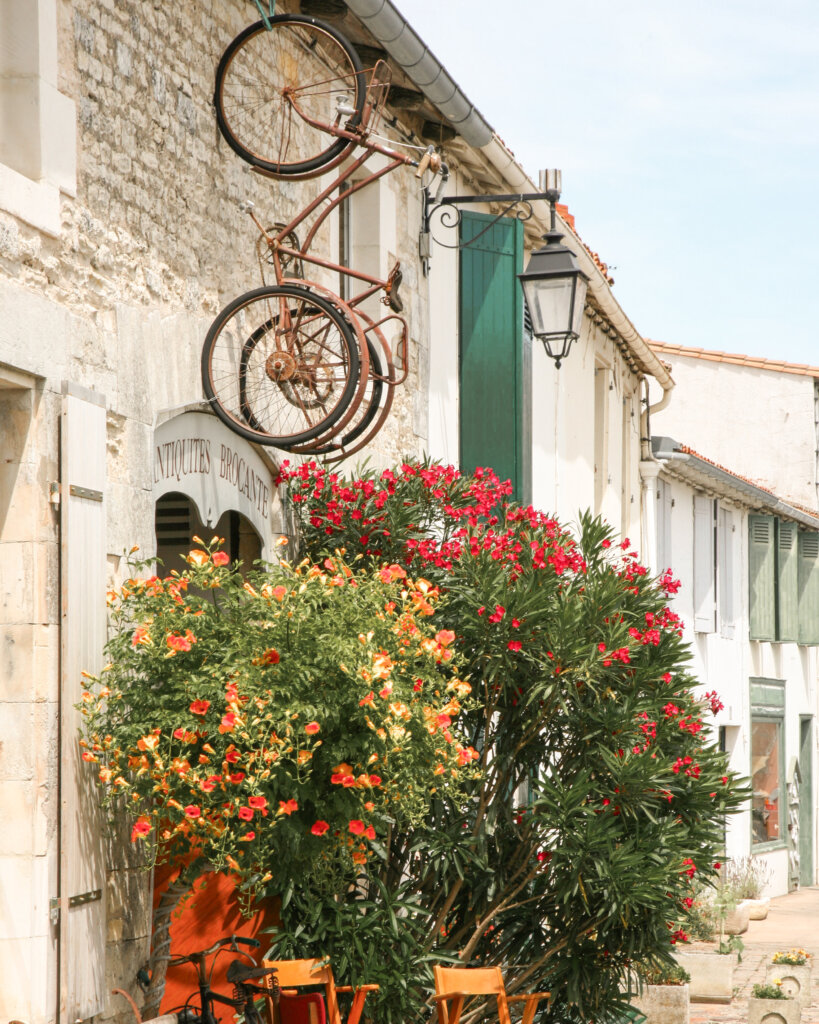
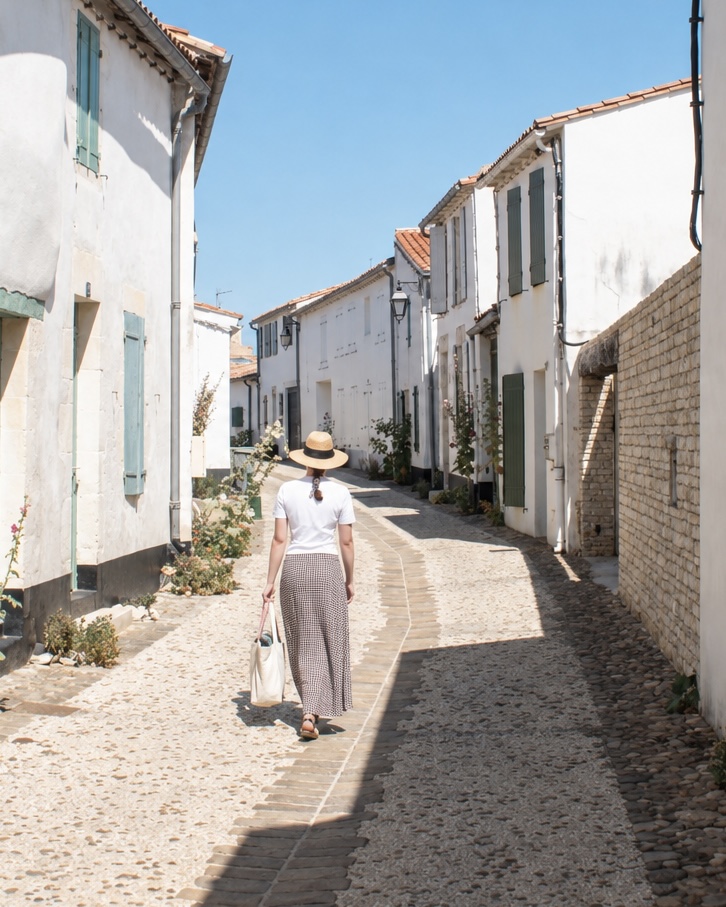
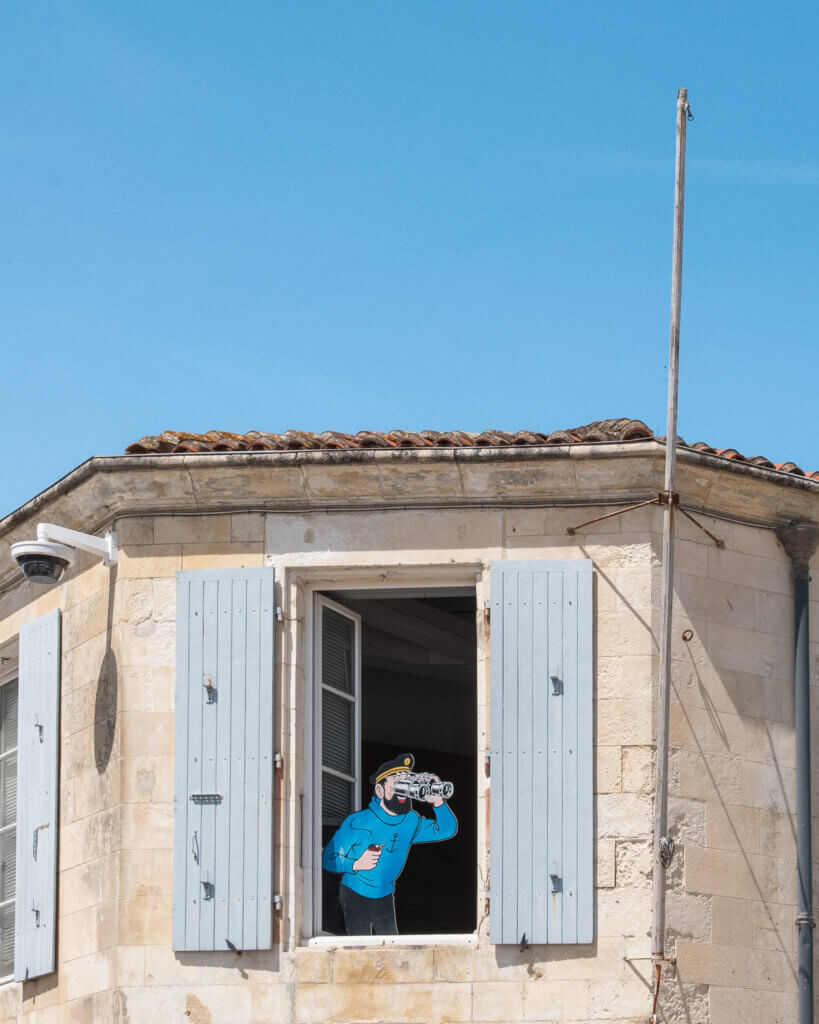
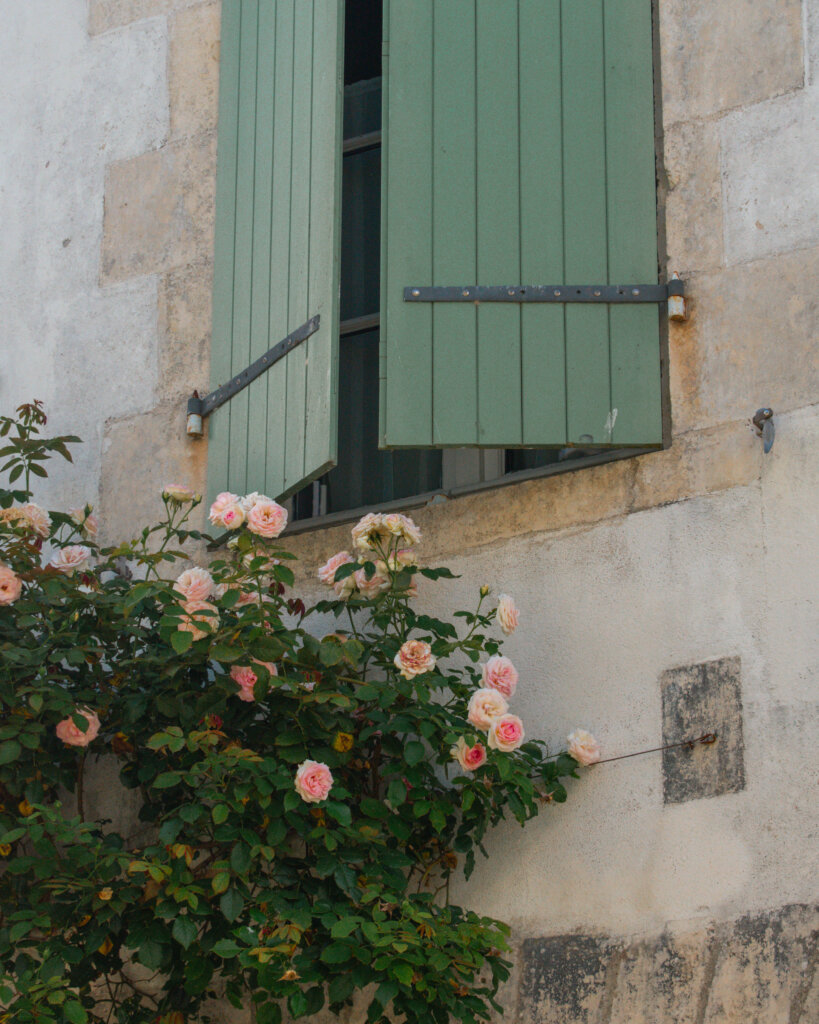
If I were recommending one all-round base for a first family holiday to Île de Ré, La Flotte would be very hard to beat. You have the beautiful market, harbour, restaurants, boutiques and enough going on that you don’t need to get on a bike every single time someone wants an ice cream.
Likewise. Saint-Martin-de-Ré is a good choice if you like having plenty within walking distance.There are restaurants, cafés, shops, the harbour, market, playground, carousel, the Clocher Observatoire and the Vauban fortifications all in one fairly compact place. The trade-off is that it is one of the busiest parts of the island.
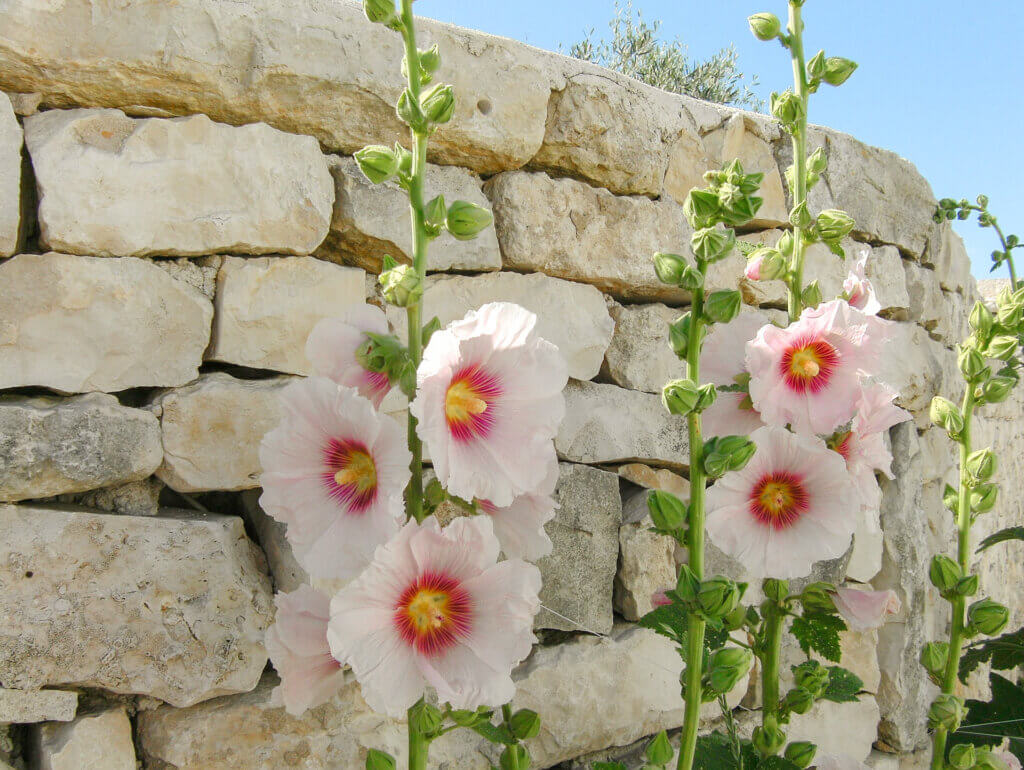
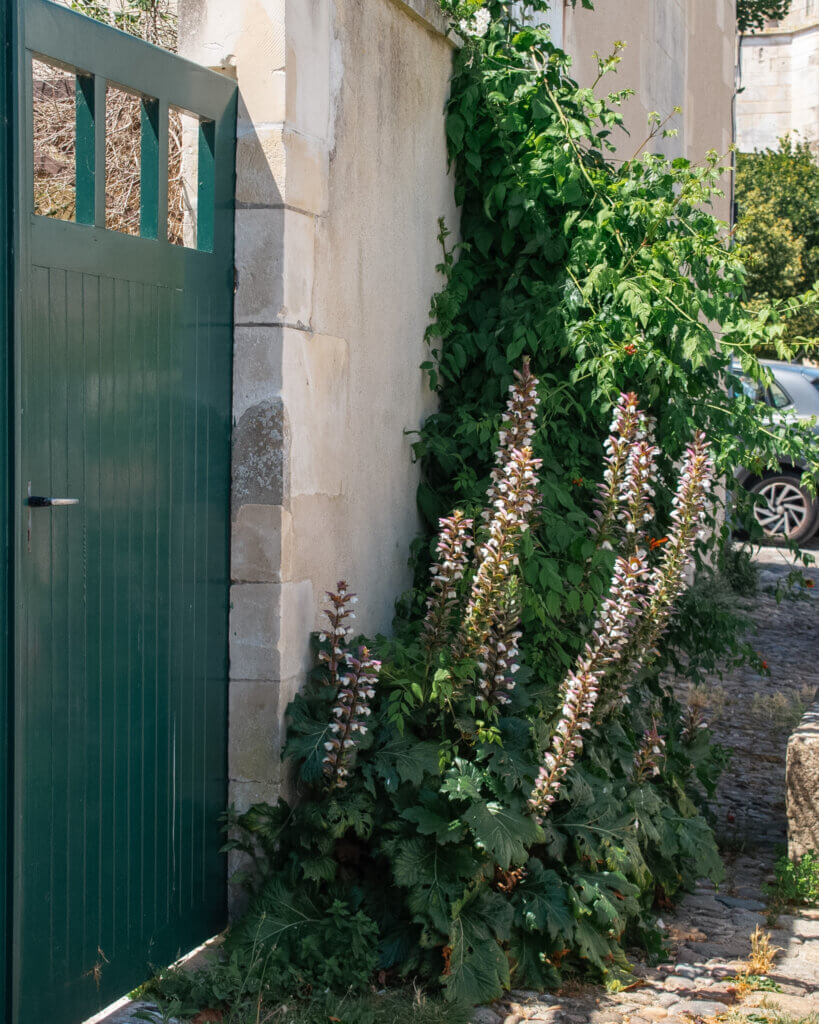
But for pure village charm, Ars-en-Ré is my top pick. It has a quieter, more atmospheric feel than some of the busier settlements and is very well placed for exploring the salt marshes, lighthouse and western end of the island. Le Bois-Plage-en-Ré gets plenty of attention, but my vote for the loveliest village on Île de Ré goes to Ars-en-Ré. Its distinctive black-and-white church spire rises above white houses with green shutters, narrow lanes and hollyhocks. It feels wonderfully Rétais without being quite as busy as Saint-Martin. Go without too much of an agenda. Wander the streets, have coffee, browse the market, eat something good and stay for dinner at Amuse if the opening days align.
WHAT TO DO ON THE ÎLE DE RÉ
Climb the Phare des Baleines
At the western end of Île de Ré, Phare des Baleines deserves its place on everyone’s itinerary. The lighthouse rises 57 metres high and there are 257 steps between you and the viewing platform.
It is a proper climb, particularly with children. But the views from the top are incredible. From the platform there is a 360-degree panorama over the Atlantic, the northern end of Île de Ré, beaches, marshes and villages. And because Île de Ré understands family travel extremely well, there is ice cream at the bottom. The site also includes the Vieille Tour, dating from 1682, a small lighthouse museum and a landscaped park, so allow around 90 minutes to two hours if you want to see everything rather than simply climb the tower.
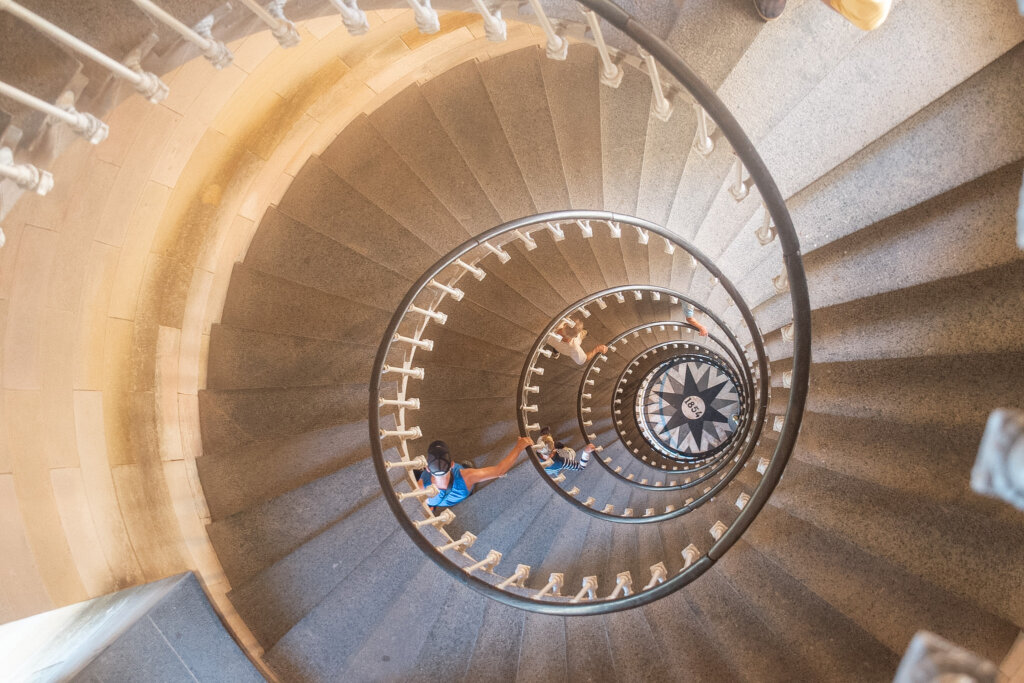
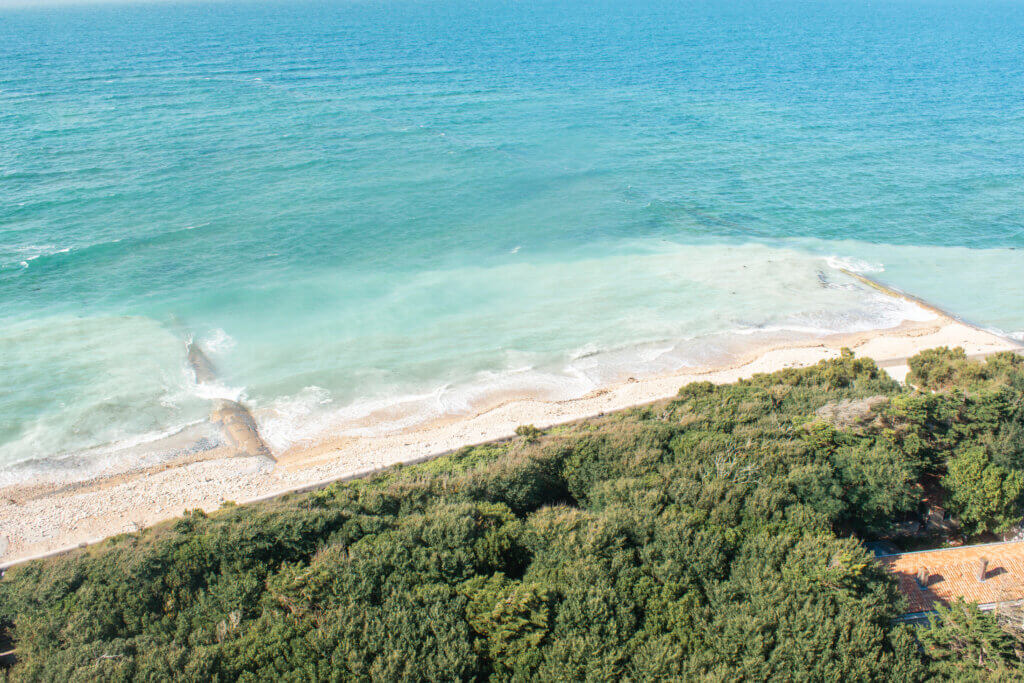
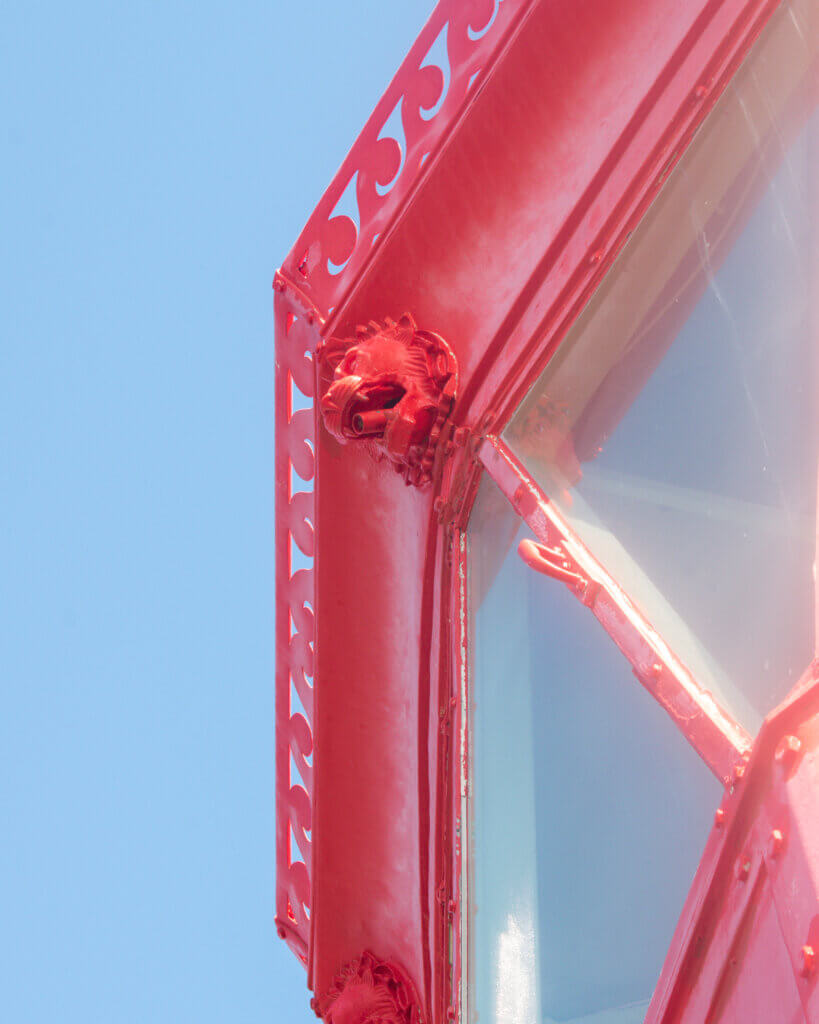
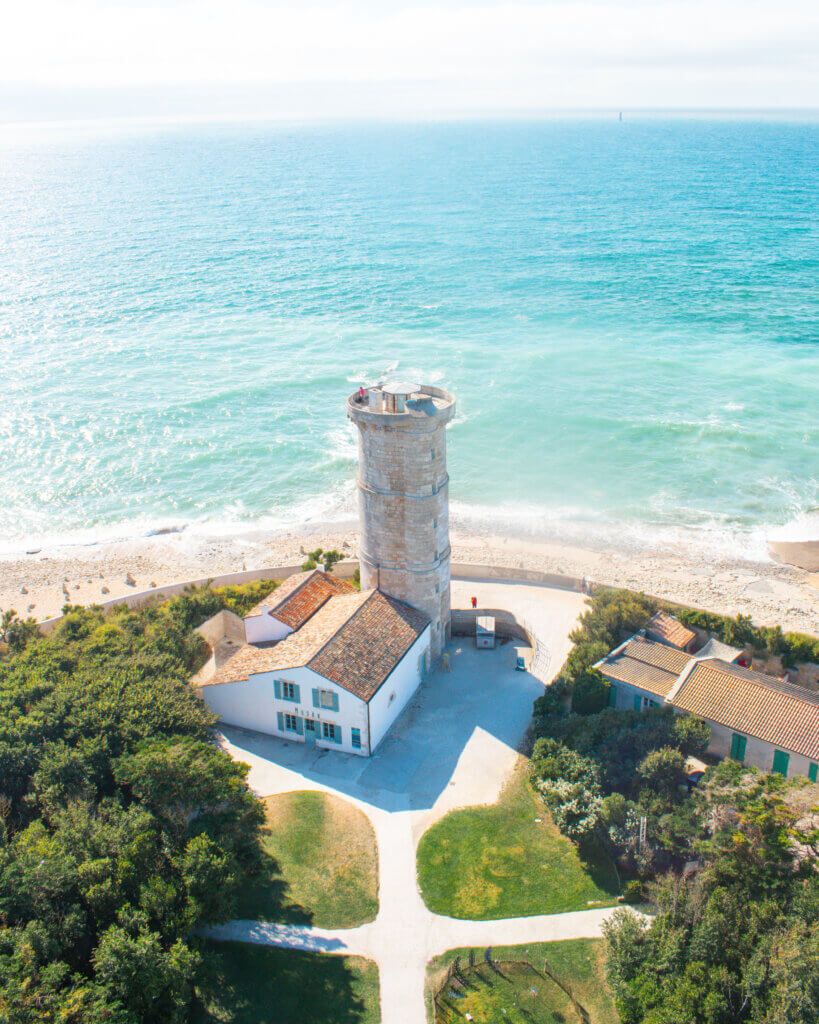
The lighthouse is open year-round, with longer hours in summer. For 2026, entry to the Grand Phare alone costs €4.80 for adults and €3.20 for children aged 7–12, with under-sevens free; combined tickets including the museum and Vieille Tour are also available. The lighthouse is one of Île de Ré’s most visited attractions, with the busiest period generally between 2pm and 4pm, so go before noon or towards the end of the day if you can.
There is paid parking close to the lighthouse, but it can become busy in July and August.
Be aware there is no lift to the top of the lighthouse, so the 257-step climb isn’t accessible to visitors with reduced mobility. The park, surrounding site and museum are much more accessible, however, and the museum itself has a lift.
Climb the Clocher Observatoire in Saint-Martin-de-Ré
Phare des Baleines gets most of the attention when it comes to views, but there is another fantastic viewpoint right in Saint-Martin-de-Ré.
The Clocher Observatoire de Saint-Martin-en-Ré is the viewing platform at the top of the church in the centre of town. If you enjoy seeing somewhere from above, I would do *both* this and Phare des Baleines. The lighthouse gives you the scale and landscape of the island; the church tower gives you a wonderful bird’s-eye view of one of its most beautiful towns.
The climb is short – 117 steps all diligently counted by my preschooler! – but the staircase is narrow, steep and uneven in places, with wooden sections as you approach the top. There is no lift, so it is not suitable for wheelchairs or anyone uncomfortable with steep, enclosed staircases.
Tickets cost €2.30 for adults and €1.30 for children. The Clocher Observatoire is generally open from the February school holidays until 11 November, plus the Christmas holiday period, although hours can change with the weather.
Meet the Famous Donkeys in Culottes
This one is wonderfully eccentric.
Île de Ré is famous for its ânes en culottes — donkeys in trousers.
The tradition has practical origins: the protective leg coverings were historically used to help shield working donkeys from insects while they worked around the island’s salt marshes.
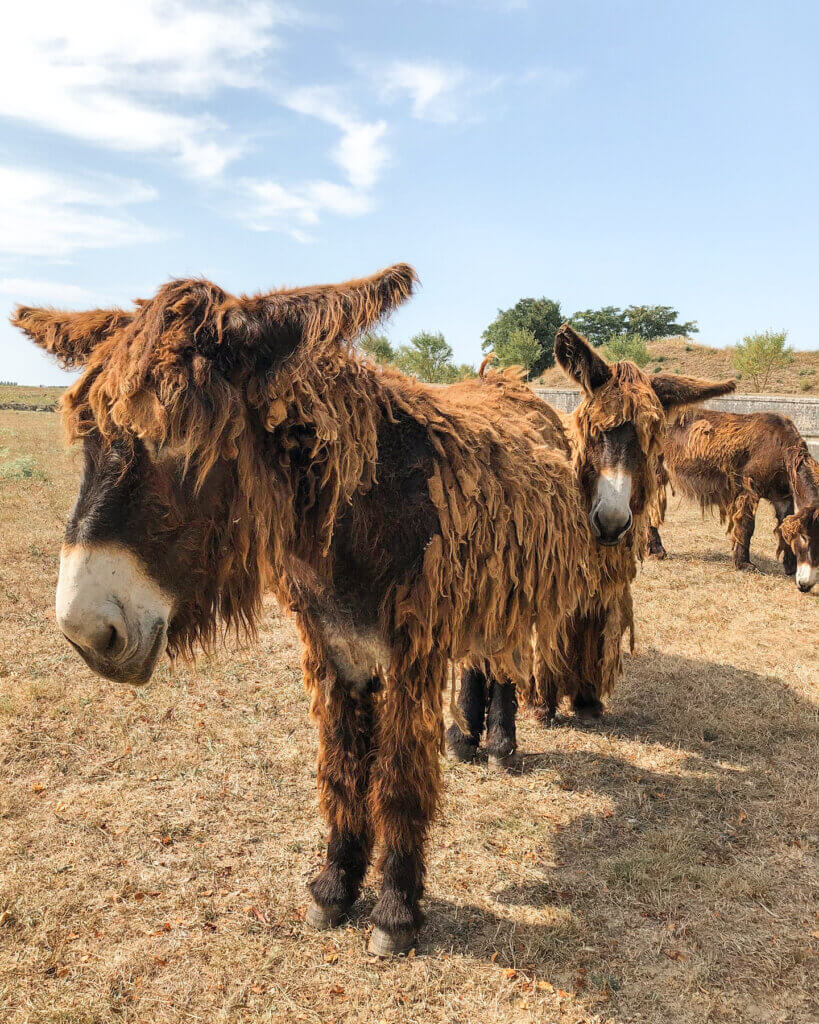
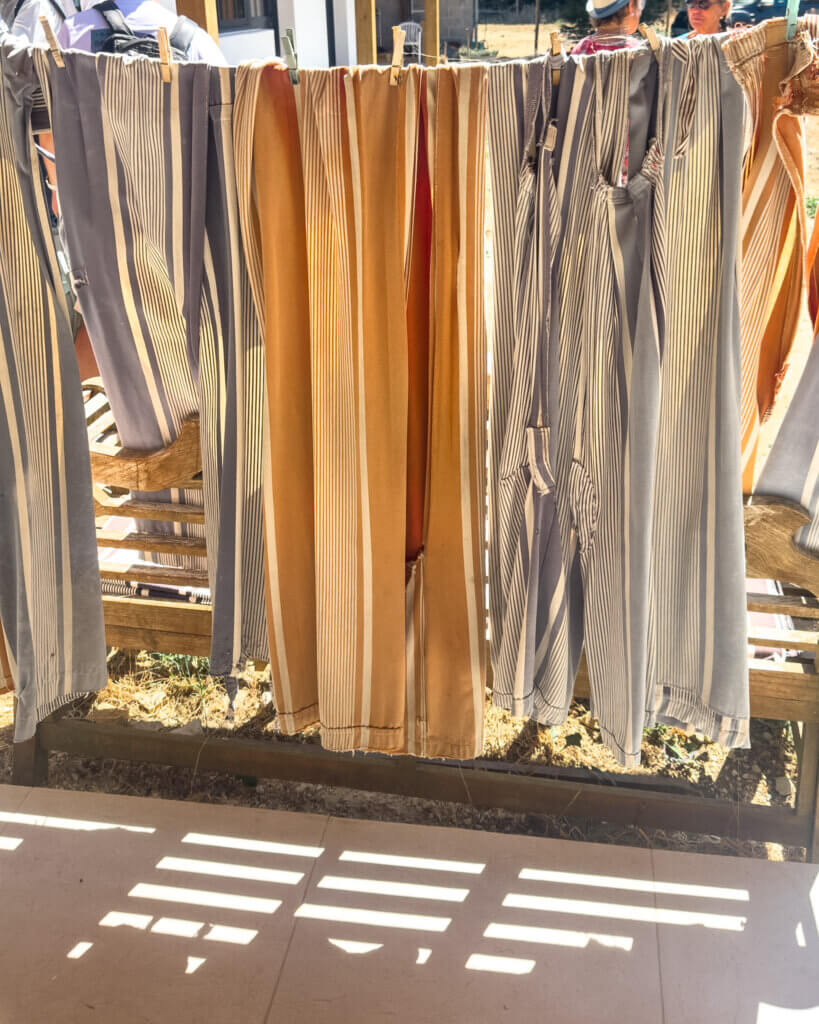
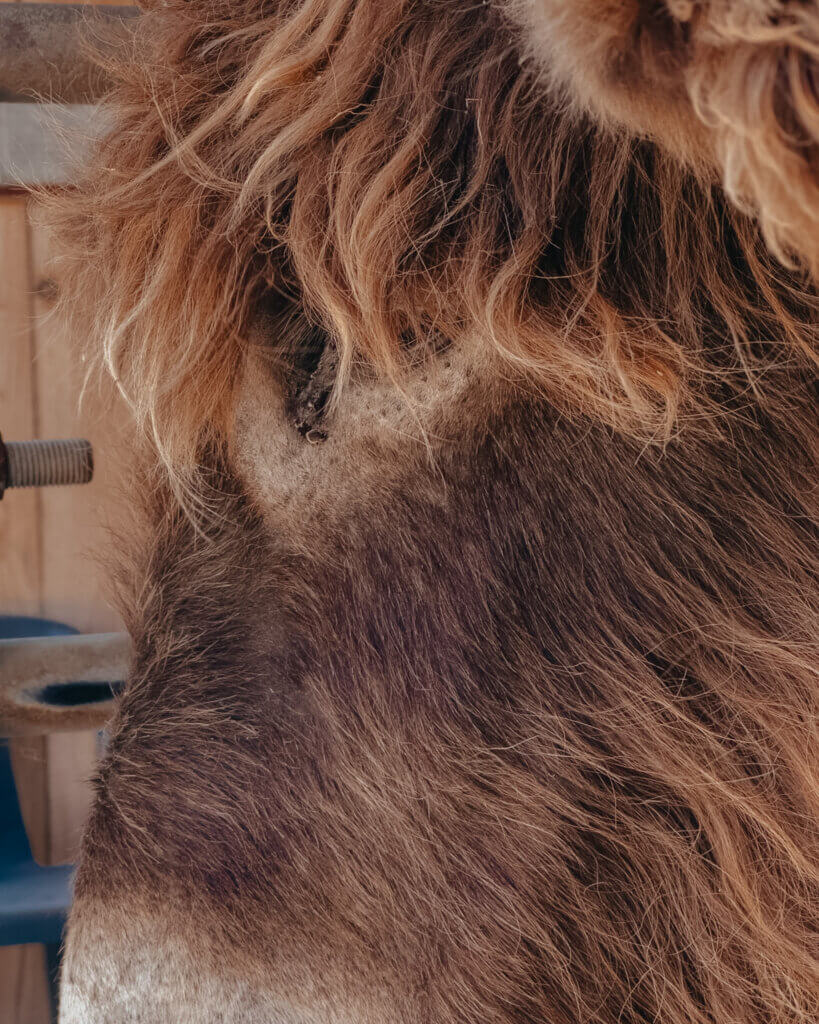
For a low-key family outing, put “Ânes en Culottes” near Saint-Martin-de-Ré into Google Maps and you’ll find a small farm/shop where you can see the extremely furry donkeys. The owners were very friendly and there was information explaining the history of the tradition. Our children loved it. It is not a huge attraction, but a fun little detour. Drop in, meet the donkeys, buy a few artisan soaps and carry on exploring.
Follow the oyster coast — even if you don’t eat oysters
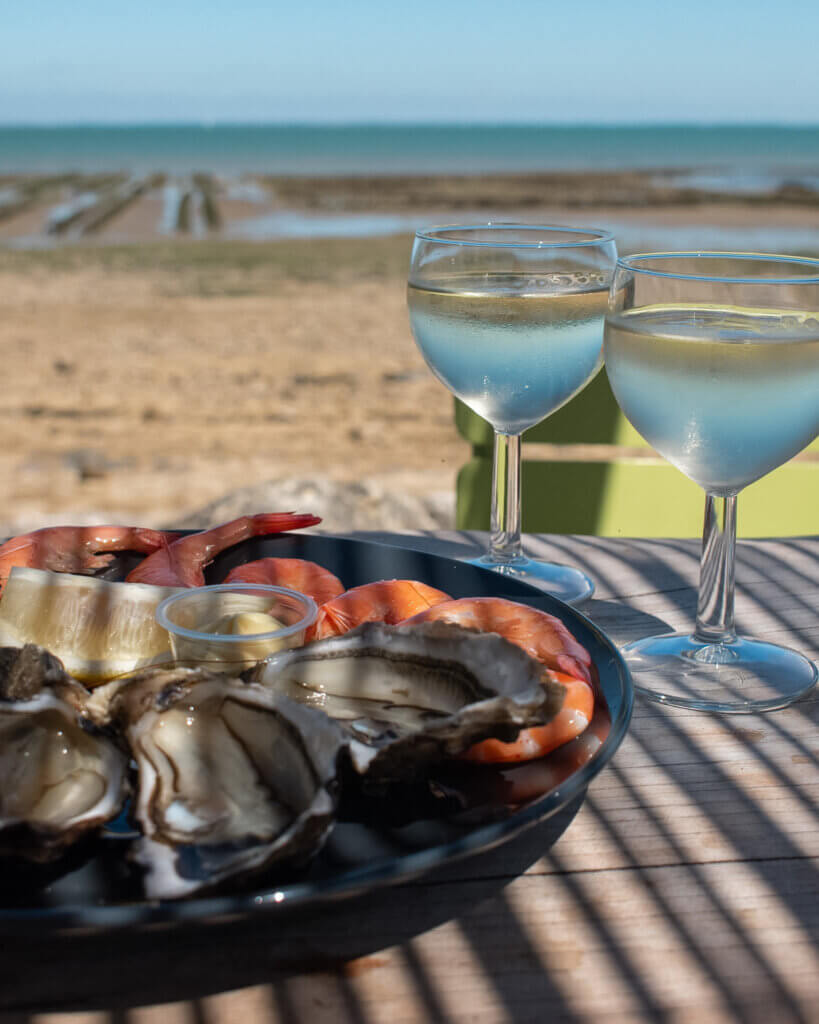
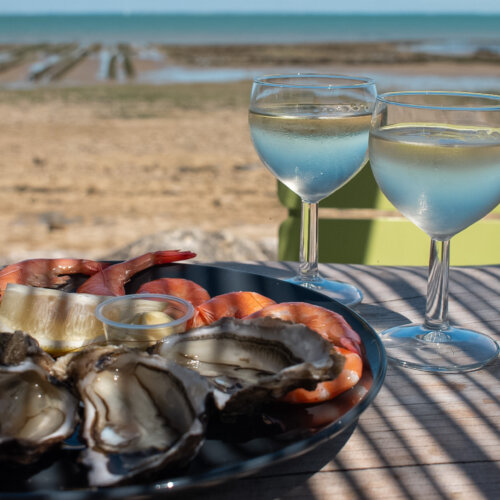
Oysters are a big deal on Île de Ré. My husband is a mega fan. Me? Absolutely not. But the island’s oyster culture is still worth seeking out even if, like me, you have no intention of eating one.
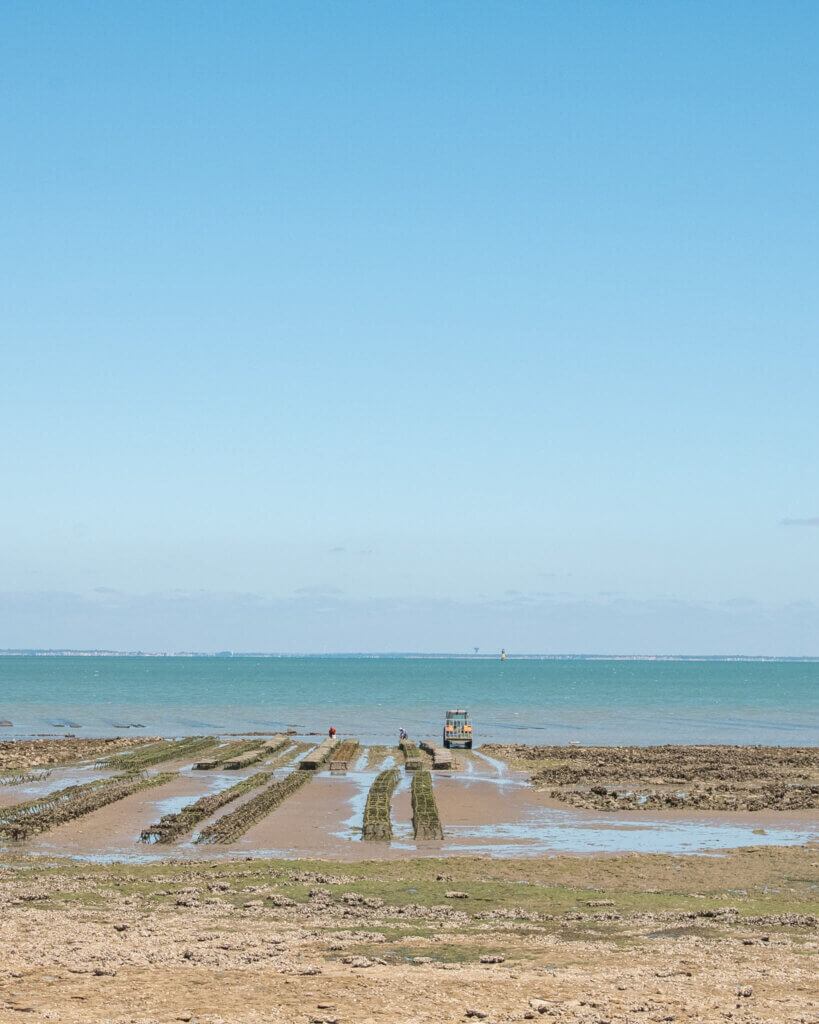
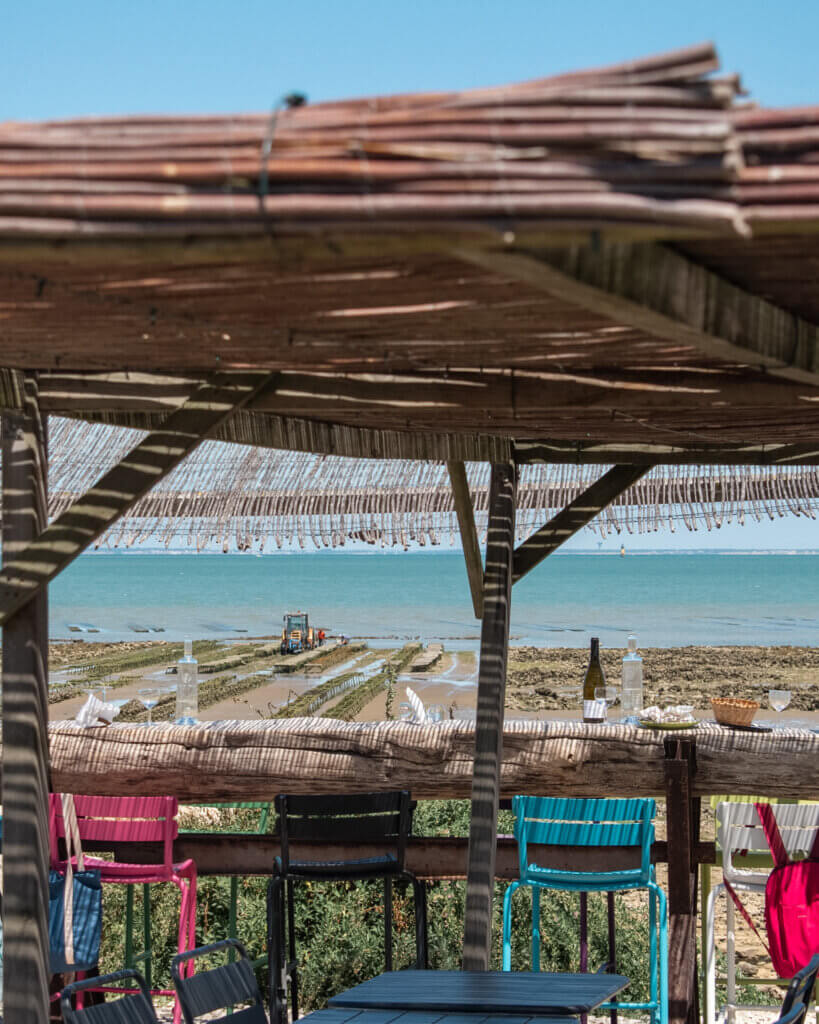
There are multiple oyster cabins along this stretch of coast. Rather than treating one shack as the destination, make an afternoon of wandering or cycling between them.
At low tide, you may also see the extraordinary tractors and machinery heading out across the exposed oyster beds. Our preschooler was fascinated. And frankly, watching tractors drive into the sea is a pretty good family attraction whether you like oysters or not.
Lilleau des Niges
At the wild northern end of Île de Ré, Lilleau des Niges is a landscape to experience slowly. Salt marshes, tidal mudflats and shallow lagoons spread around the Fier d’Ars, creating one of the island’s richest habitats for migratory birds. Come by bike or on foot from Ars-en-Ré or Les Portes-en-Ré, preferably when the light is soft and the marshes are at their most atmospheric, and resist the temptation to treat the reserve as another stop to tick off. The pleasure here is in lingering: watching the changing water and sky, listening for birdlife and experiencing the quieter, wilder side of Île de Ré that lies beyond its immaculate villages and beaches. The nearby Maison du Fier is worth a stop for an introduction to the reserve and its wildlife.
Cycle through the salt marshes around Loix
… but don’t prioritise them with small children.
The salt marshes are an important part of Île de Ré’s landscape and history, and cycling through the marshes around Loix is certainly interesting.
But I probably wouldn’t put them at the top of your list. There are prettier cycling routes and more instantly rewarding landscapes elsewhere on the island, particularly if you’re balancing adult sightseeing with the patience of toddlers.
If you have plenty of time, go. If you have only three or four days on Île de Ré with kids, I would prioritise beaches, villages, markets, Phare des Baleines and cycling between them.
Eat An Unreasonable Quantity of Ice Cream At La Martinière
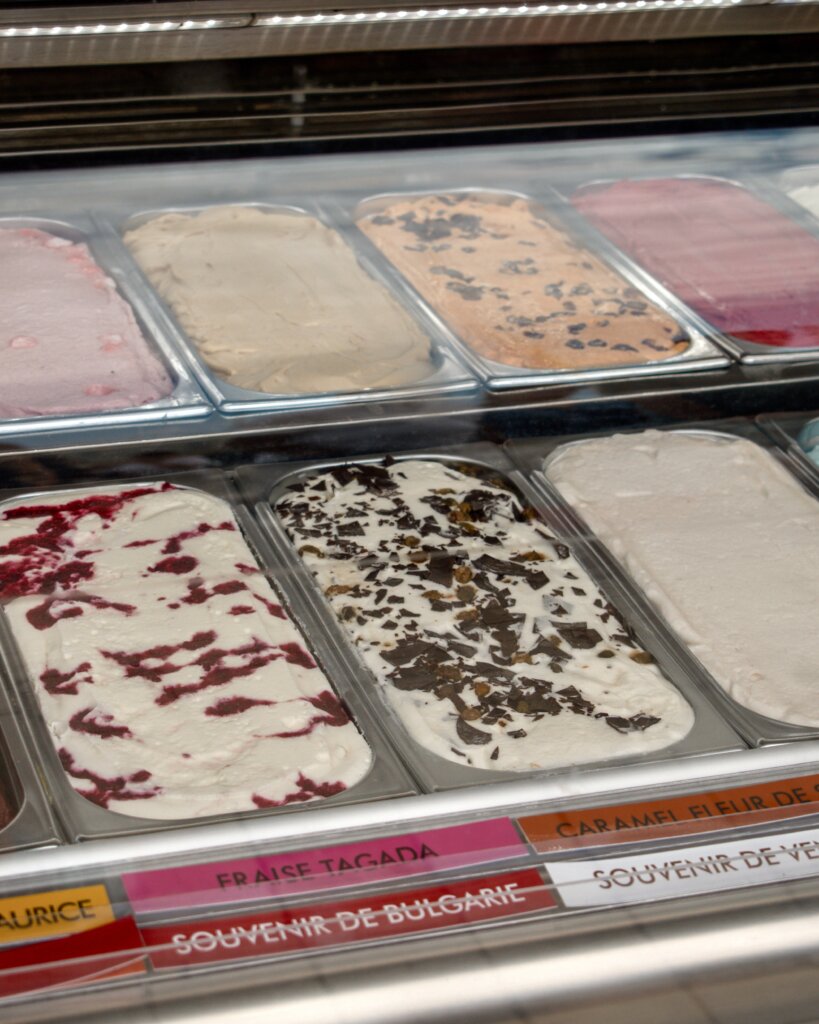
I would rarely include a foodie spot in a travel guide, when I also have a complete guide to where to eat on the Île de Ré. But the ice cream here is that good! I have never seen an ice-cream selection quite like La Martinière. It is an Île de Ré institution, with outlets in places including Saint-Martin-de-Ré, La Flotte, Le Bois-Plage-en-Ré and Saint-Clément-des-Baleines near the lighthouse. The Saint-Martin-de-Ré shop alone advertises somewhere in the region of 250–300 flavours across its repertoire. And these aren’t simply variations on vanilla and chocolate. We ate so much on our last trip, our preschooler left believing a daily artisanal ice cream is a human right… and I am not sure I can disagree!
THE MARKETS
French markets are always one of my favourite parts of a trip, and Île de Ré has some excellent ones. Arrive between 8:30 and 10:00 am for the freshest produce and easier parking. In July and August, almost every village hosts a morning market, and some also have evening markets.
My two favourite markets are La Flotte and Saint-Martin-de-Ré.
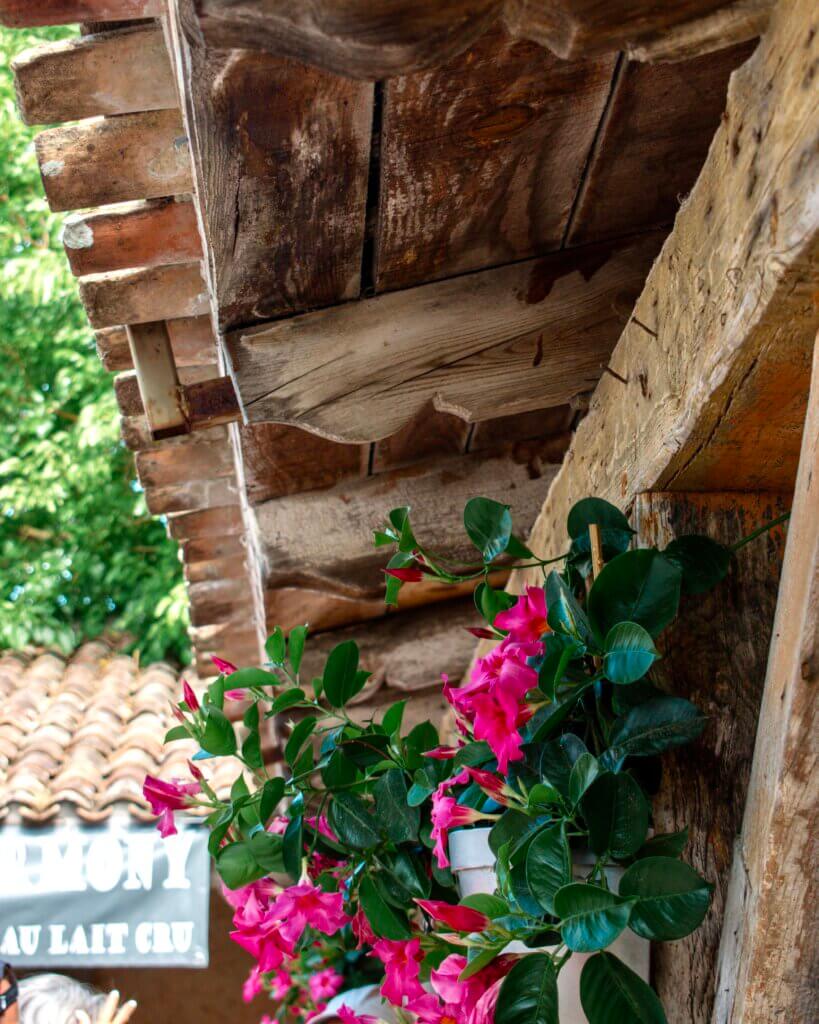
La Flotte undoubtedly has the prettiest market. Its courtyard and covered stalls have a wonderfully old-world feel, with arcades, wooden stalls and tiled roofs inspired by medieval market architecture. The present market dates from the early 19th century. Go early, buy something for breakfast or a picnic and then wander through La Flotte’s narrow lanes afterwards. It is one of the most atmospheric morning outings on the island.
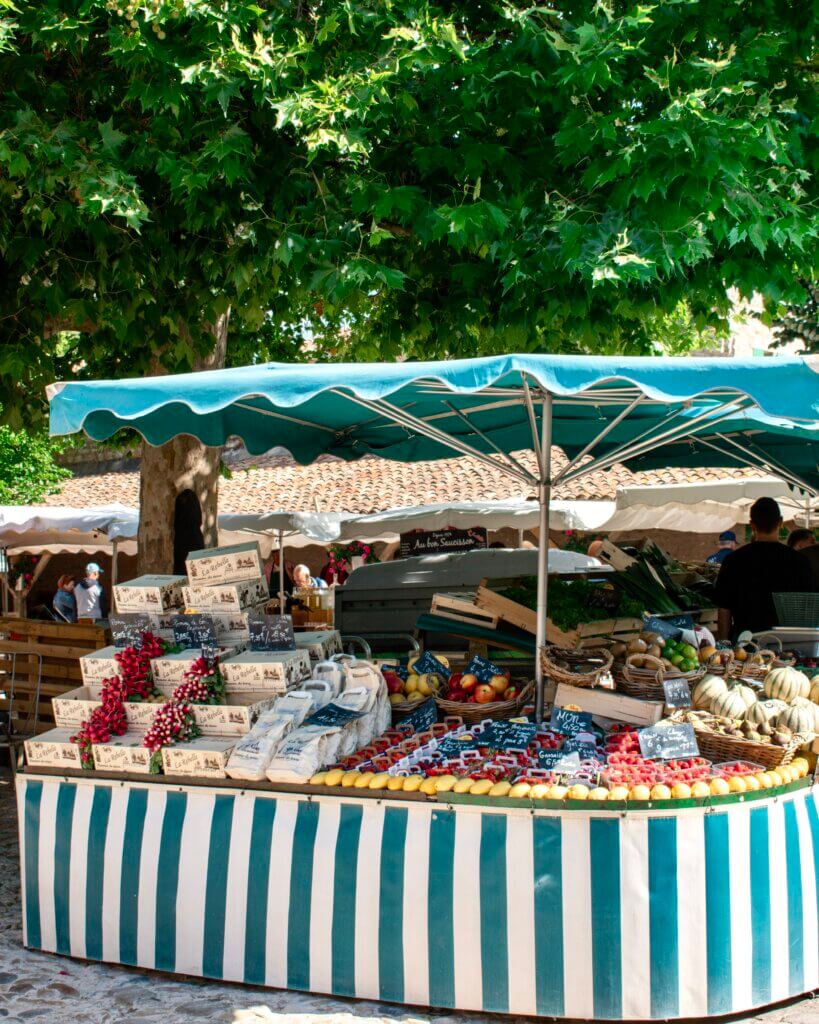
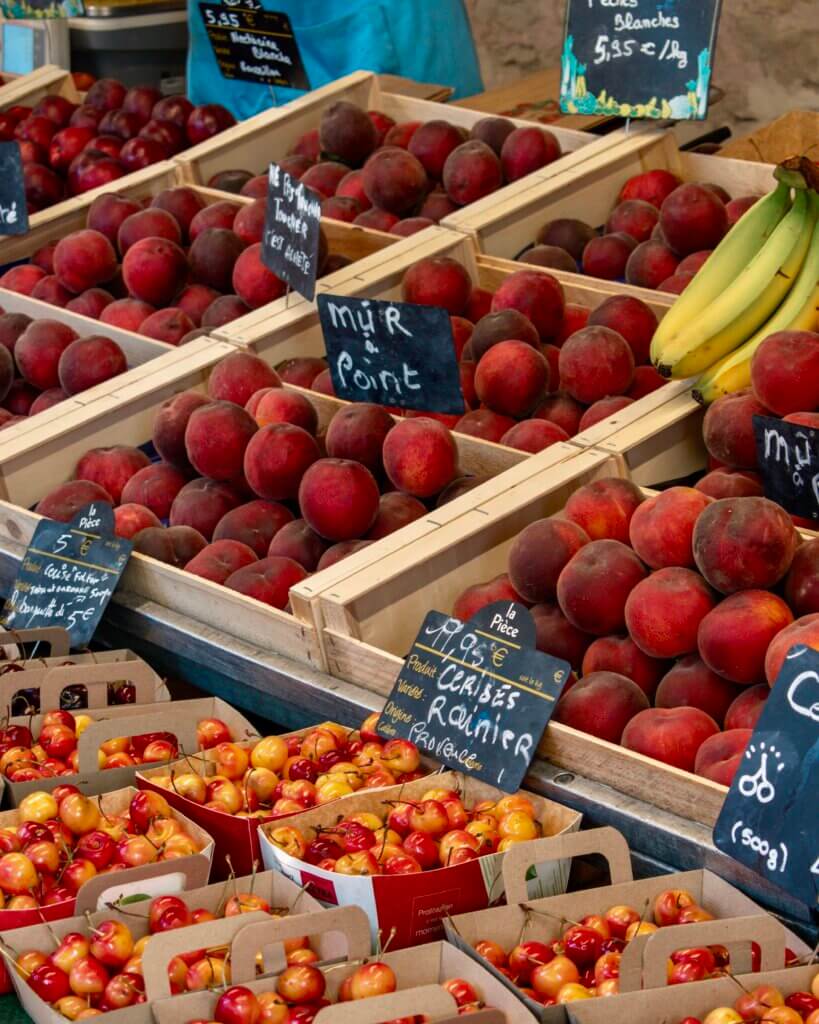
Saint-Martin’s market felt more produce and commercially focused, with plenty of food and things to browse. If La Flotte wins for setting, Saint-Martin-de-Ré is useful when you actually want to stock up.
If you are looking for more extensive information on the markets of Île de Ré, and many suggestions for making the most of the food scene, check out my complete guide on where to eat on the Île de Ré.
THE BEST BEACHES ON ÎLE DE RÉ
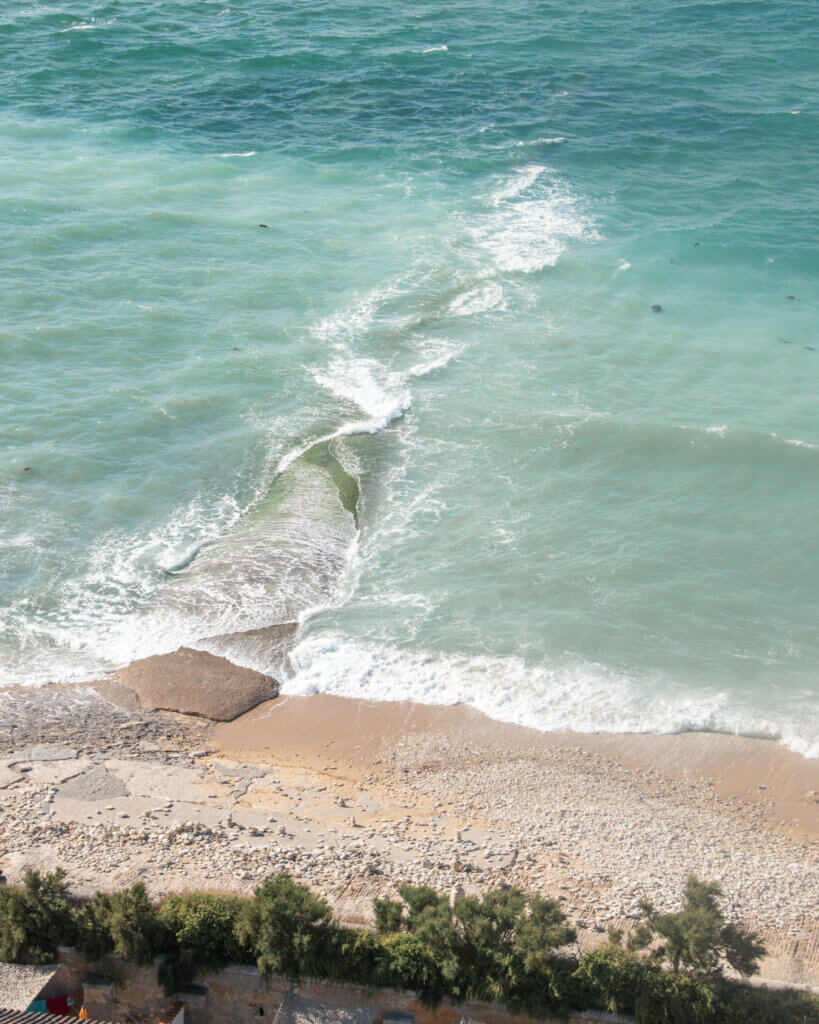
One of the things that surprised us most about Île de Ré was how wild some of its beaches feel. There are fashionable seaside resorts here, certainly, but there are also long expanses of sand, dunes, pine trees and huge skies. Some genuinely reminded me of beaches back home in Northumberland.
My two top picks are:
- Plage de Trousse-Chemise: If I had to choose just one beach on Île de Ré, it would probably be Plage de Trousse-Chemise, towards the far end of the island near Les Portes-en-Ré. This is the dreamier, wilder side of Ré: sand, forest and an expansive Atlantic horizon. It feels removed from the busier harbour villages and is exactly the sort of place where you intend to stay for an hour and somehow lose most of the afternoon.
- Plage des Gollandières: At Le Bois-Plage-en-Ré, Plage des Gollandières is another lovely family option. The broad beach is beautiful, but we also really liked the Passerelle des Gollandières, the wooden boardwalk running alongside the coast. It makes a particularly nice combination with time in Le Bois-Plage-en-Ré: market or village in the morning, beach and boardwalk afterwards.
For more extensive beach day suggestions, read my guide to the best Île de Ré beaches to visit with children.
WHAT TO DO ON ÎLE DE RÉ WHEN IT RAINS
Île de Ré is at its loveliest outdoors, so I wouldn’t pretend this is an island packed with enormous rainy-day attractions. But bad-weather days don’t need to be a disaster.
Markets are an obvious first stop. La Flotte’s covered market is particularly atmospheric in less-than-perfect weather, and a long lunch suddenly becomes an entirely legitimate afternoon activity. You could also visit one of the island’s small museums or heritage attractions, explore Maison du Fier, browse the boutiques in La Flotte or Saint-Martin, or schedule an extended crêpe-and-hot-chocolate stop.
If the weather is genuinely awful for an entire day, La Rochelle is the obvious escape, with its world famous aquarium and multiple museums. Although remember you will need to pay the eco-tax again to drive back onto the island.
SUGGESTED ITINERARIES
Three days on Île de Ré with Children
If you only have a long weekend, I wouldn’t try to see all ten villages. Choose the highlights.
- Day 1: La Flotte and Saint-Martin-de-Ré. Start at La Flotte market, wander the ruelles and boutiques and then cycle towards Saint-Martin-de-Ré. Have lunch, climb the Clocher Observatoire, explore the harbour and finish with La Martinière ice cream.
- Day 2: Ars, the lighthouse and Trousse-Chemise. Spend the morning wandering Ars-en-Ré. Then head west to Phare des Baleines, climb the 257 steps and continue to Plage de Trousse-Chemise for the afternoon. This would probably be my favourite day.
- Day 3: beach and oyster coast. Spend a slow morning at Plage des Gollandières and walk the Passerelle des Gollandières. In the afternoon, explore part of the oyster-growing coast. Stop at an oyster shack for anyone who actually likes oysters and time it for low tide if you want children to see the tractors heading out across the beds.
One Week on Île de Ré with Children
A week gives you enough time to explore without turning every day into an itinerary.
I would loosely divide it like this:
- Day 1: Arrive, collect bikes and explore your local village.
- Day 2: La Flotte market, cycling and Saint-Martin-de-Ré.
- Day 3: Beach day at Plage des Gollandières.
- Day 4: Ars-en-Ré, Phare des Baleines and Trousse-Chemise.
- Day 5: Slow day — local market, playground, pool or another beach.
- Day 6: Oyster coast, Loix or nature reserve depending on children’s ages.
- Day 7: Return to whichever place everyone liked most. One of the easiest mistakes on Île de Ré is spending the whole holiday collecting villages instead of simply going back to the beach, market or ice-cream shop you loved. The pleasure of Île de Ré is precisely that you don’t need to collect every sight. Go back to the beach everyone loved. Order another ice cream. Cycle home slowly.
PRACTICAL ESSENTIALS
GETTING THERE
Despite its wonderfully escapist feel, getting to Île de Ré is surprisingly easy. The island is connected to La Rochelle on France’s Atlantic coast by a spectacular three-kilometre bridge, open year-round. If you’re driving, you pay an eco-tax when crossing onto the island. If you’re driving, an eco-tax is charged when you cross onto the island. In 2026 it ranges from €4 in low season to €16 in high summer; there is no further charge when you drive back to La Rochelle. Pedestrians and cyclists cross free.
For travellers driving from the UK to Île de Ré, take the Channel crossing or ferry that best suits your wider France road trip and then head south-west towards La Rochelle. Alternatively, consider a ferry into Normandy or Brittany if you want to make the journey part of the holiday, perhaps combining Île de Ré with a road trip through the Loire Valley or along the Atlantic coast. Have a look at my extensive guides to Brittany, if you want help planning your road trip.
La Rochelle is the main gateway to Île de Ré, with TGV connections from Paris and year-round buses from La Rochelle railway station and airport serving all ten villages on the island. In summer, direct flights connect La Rochelle with several UK airports, including London, Bristol and Manchester; routes vary by season and year, so check the current airport schedule before booking.
GETTING AROUND
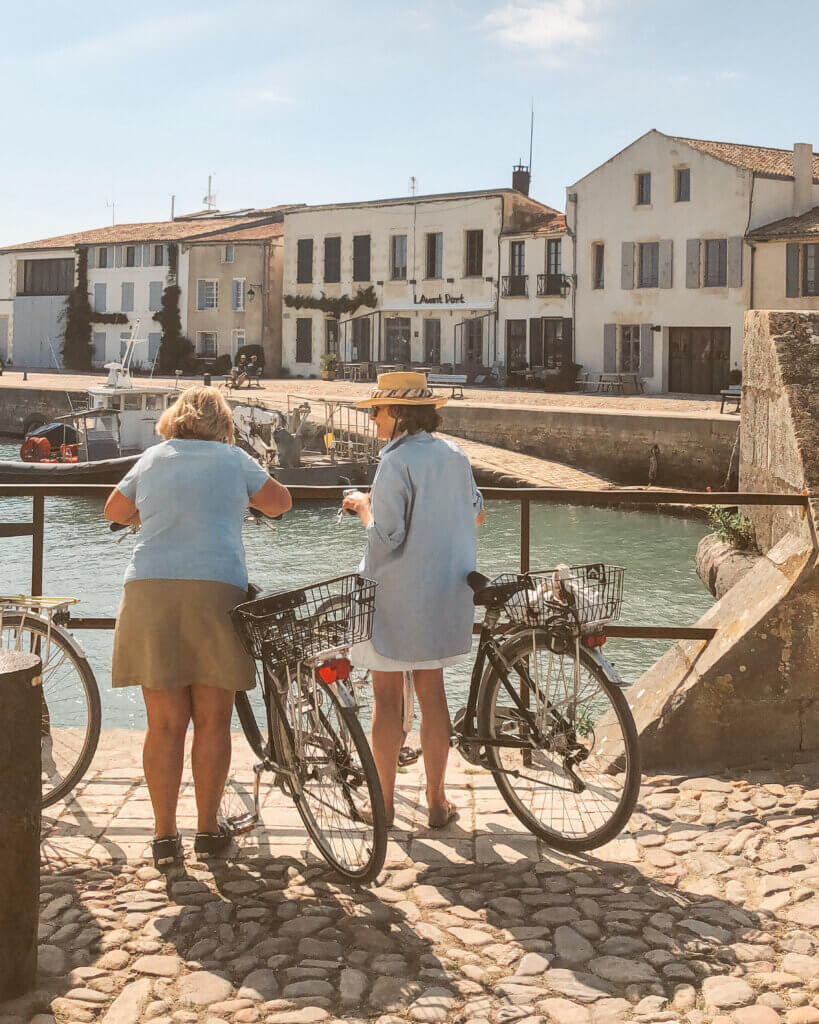
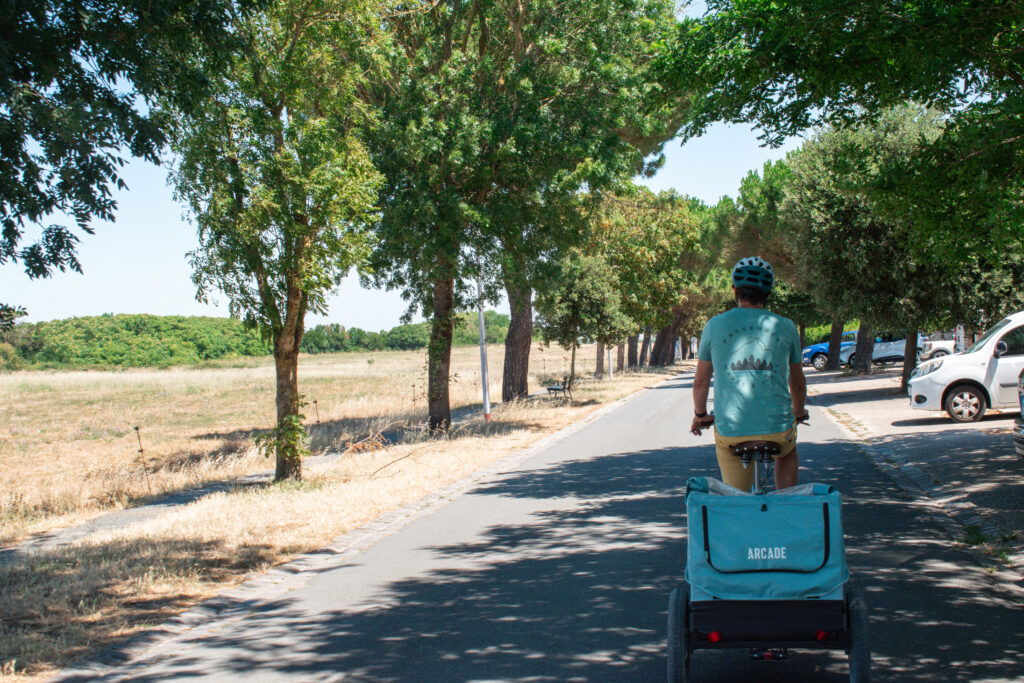
By Bike: The best way to explore Île de Ré is undoubtedly by bike. A network of mostly flat, dedicated cycle routes connects its villages, beaches, vineyards and salt marshes, making cycling both practical and part of the experience. Bike and e-bike rental shops are easy to find across the island. Cars are useful if you’re travelling with lots of luggage or young children, but traffic and parking can be frustrating during peak summer. Local buses provide another option between the main villages and La Rochelle, although services are worth checking in advance outside the high season.
We hired ours online from Beach Bikes, who have rental points across Île de Ré. They were incredibly helpful and friendly, and I thought the hire was good value too. We paid (2026) around £150/€180 for a week for two adult bikes, a children’s trailer and a child seat. Be sure to read my complete guide to a cycling holiday on Île de Ré, including bike hire, trailers and our favourite family routes.
By bus: If you don’t fancy cycling everywhere, buses and seasonal shuttles make it surprisingly easy to explore Île de Ré without a car. A year-round regional bus connects La Rochelle with villages across Île de Ré, currently operating as line 150. Free electric shuttles also run between parts of the island seasonally. Check the current route numbers and timetables before travelling, as services can change. Tickets for the regional bus can be bought from the driver or via the Ticket Modalis app.
Do you need a car on Île de Ré?
Not necessarily. And that is part of the charm.
Once you’re settled, bicycling between neighbouring villages and beaches is the charm of the island’s authentic brand of slow travel. There is something immensely satisfying about cycling to the market in the morning, carrying lunch home in the basket and then heading out again for an afternoon swim. That said, with small children I wouldn’t necessarily insist on doing the entire holiday without a car. A car is useful if you want to explore both ends of the island, if you’re carrying lots of beach paraphernalia, or if everyone reaches the inevitable point where another 12km on a bike suddenly seems considerably less appealing than it did over breakfast.
For us – with multiple children ranging in ages from 9 months to 4 years – the ideal balance was car for the bigger island-crossing journeys, bikes for everything else.
Practical tips for visiting Île de Ré as a family
- Hire bikes early: In busy summer periods, reserve family equipment such as trailers and child seats in advance rather than assuming you’ll find exactly what you need on arrival.
- Carry some cash: Particularly if your children are likely to spot a carousel from 300 metres away.
- Check opening days: Restaurants, oyster cabins, markets and smaller attractions can have seasonal schedules. Always check directly before making a special trip.
- Check the tides: this is particularly important for beach days — low tide is also when watching activity around the oyster beds can become an unexpected highlight.
- Take layers: This is Atlantic France. Even on beautiful summer days, sea breezes can make an extra layer surprisingly useful.
- Don’t overschedule: Île de Ré rewards slow travel. Lean into the cycle ride home, the market breakfast, the unexpected beach stop and the ice cream you absolutely didn’t need.
The main villages have supermarkets, bakeries, pharmacies and ATMs, while larger shops and services can be found around Saint-Martin-de-Ré and La Flotte. Card payments are widely accepted, although it’s useful to carry some cash for markets and smaller purchases. The island can get busy in July and August, so book accommodation and popular restaurants well ahead. For emergencies in France, call 112.
Playgrounds and Carousels
We found two particularly good playgrounds: one just outside La Flotte and another in Saint-Martin-de-Ré. There is a small bar directly next to the Saint-Martin playground, meaning you can sip whilst your children play. Ideal.
Bring cash. There are also carousels dotted around the island. Lots of them. Our littles found them completely irresistible, so I would advise keeping some cash handy if walking past a carousel without going on it is likely to result in a holiday-detonating incident. Consider yourself warned.
WHAT TO EAT ON ÎLE DE RÉ
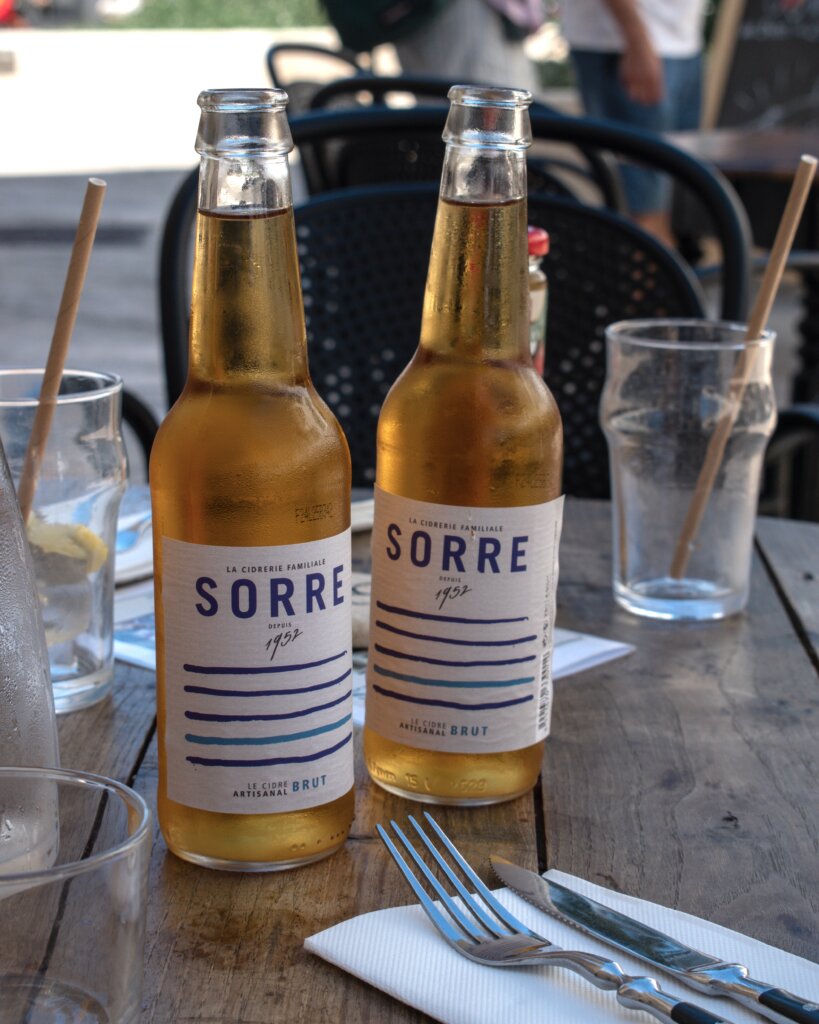
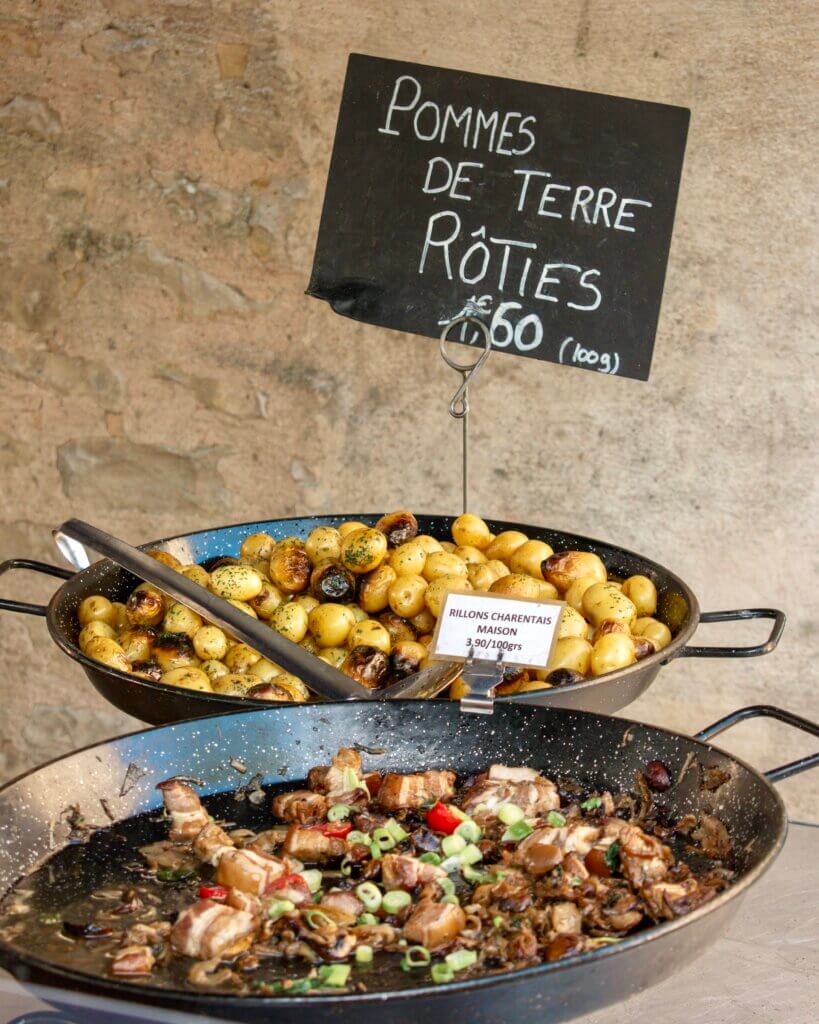
You could spend an entire holiday on the Île de Ré simply moving from one good thing to eat to another. These are my absolute top picks, but if you are looking for more extensive suggestions for making the most of the food scene, check out my complete guide on where to eat on the Île de Ré.
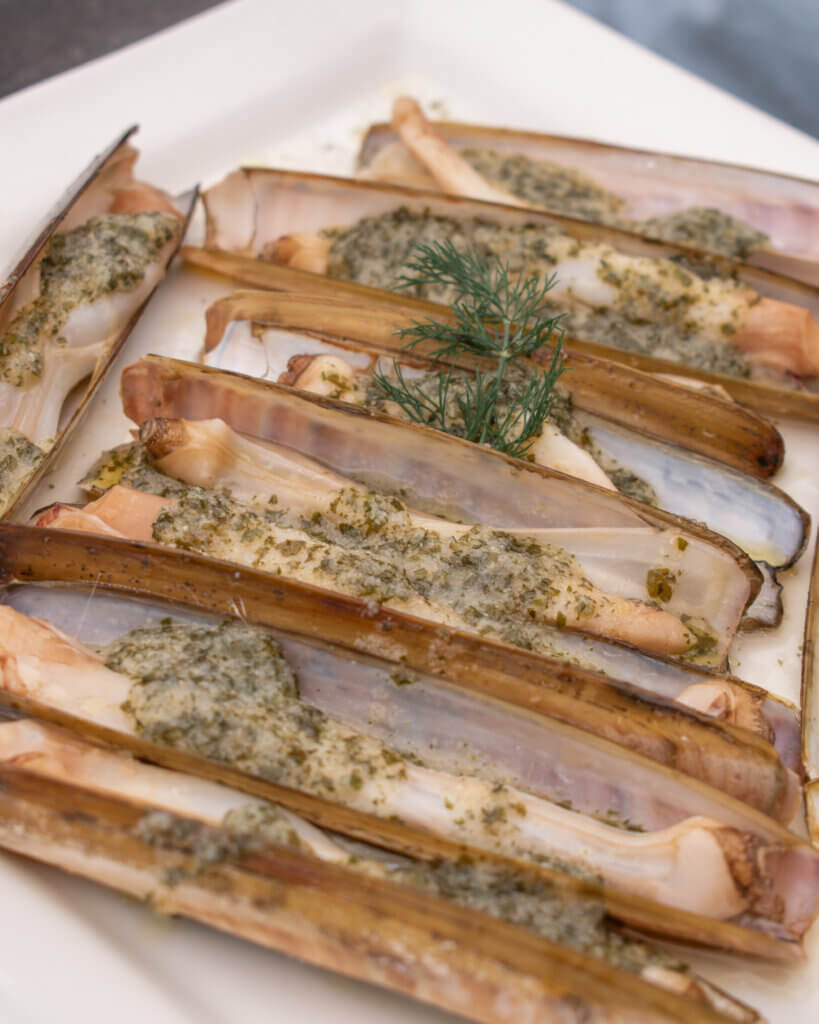
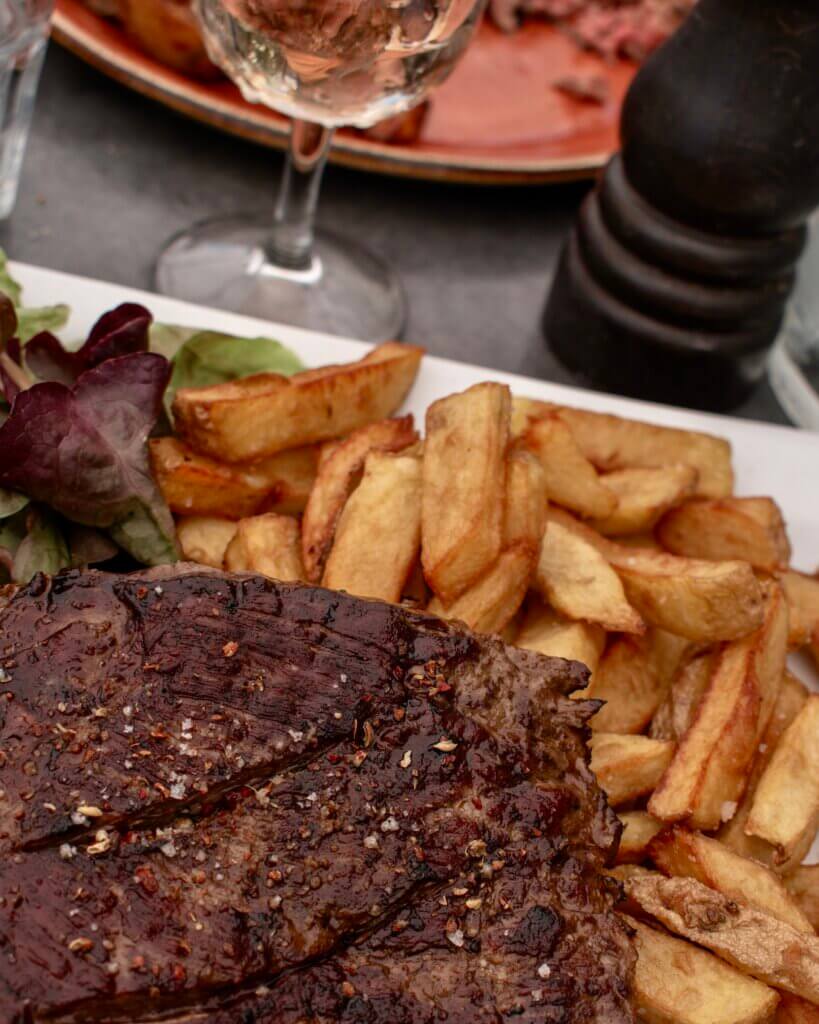
Le Bistrot Saint Martin – our favourite meal on Île de Ré — actually, one of the best lunches we had during an entire month travelling around France. Saint-Martin-de-Ré has no shortage of restaurants, but this was a meal that genuinely stood out. The steak frites and razor clams were unbelievably good.
Amuse in Ars-en-Ré – French-inspired small plates rather than a traditional three-course restaurant meal. We loved it for dinner, and Ars is a particularly lovely place to linger into the evening anyway.Opening days can be limited and seasonal, so check the current dinner schedule before making a special journey.
Re Osterea – For the quintessential Île de Ré oyster-shack experience, try Re Osterea. Simple seafood metres from where it was produced is one of the culinary experiences that really belongs to this island.
L’Huitrière de Ré – For sheer novelty value: an oyster vending machine. Only in France. Or perhaps only on Île de Ré.
La Martinière – And obviously: ice cream. You’ll find La Martinière around the island, including Saint-Martin-de-Ré, La Flotte, Le Bois-Plage-en-Ré and Saint-Clément-des-Baleines. Try cassis and thank me later.
WHERE TO STAY ON ÎLE DE RÉ
Choosing where to stay on Île de Ré can make quite a difference to the feel of your holiday. For a first family visit, La Flotte would be my all-round pick; or head west to Ars-en-Ré and Les Portes-en-Réfor a quieter, wilder side of the island. Personally, Ars is the village that stole my heart, but there really is a corner of Île de Ré to suit every sort of trip.
If you’re deciding between villages, head to my complete guide to where to stay on Île de Ré, to compare the best areas for families, beaches, cycling and shorter stays, alongside my pick of the island’s boutique hotels, luxury campsites and stylish rentals.
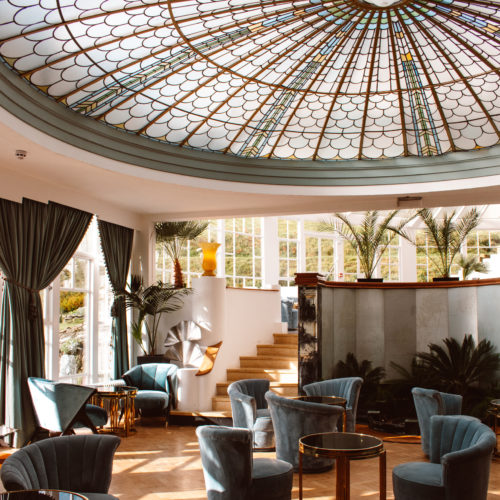
Hôtel Le Sénéchal, Ars-en-Ré – my top pick for understated island style. Individually designed rooms, a flower-filled garden and small heated pool are tucked into the heart of beautiful Ars-en-Ré, moments from the port.
La Maison Douce, Saint-Martin-de-Ré – a romantic little hideaway behind the harbour, combining a 19th-century house with softly eclectic interiors and a secluded garden. Come for slow breakfasts beneath the veranda and Saint-Martin-de-Ré on your doorstep.
Villa Clarisse & Spa, Saint-Martin-de-Ré -the splurge. An elegant 18th-century townhouse with just a handful of refined rooms, a serene garden and heated pool, hidden only 60 metres from Saint-Martin’s harbour.
Slow Village Saint-Martin-de-Ré -a leafy, laid-back alternative to a hotel, with renovated cabins scattered through a car-free park of mature trees. Add a large pool, restaurant, kitchen gardens and easy cycling into Saint-Martin.
Résidence de Charme Le Petit Bois, Sainte-Marie-de-Ré – one of the island’s best-value finds: neat little self-catering houses gathered around a lovely heated pool and garden. Quiet, charming and particularly good if you want boutique-hotel looks without boutique-hotel prices.
La Villa du Phare, Sainte-Marie-de-Ré – a smart option for couples or a small family who prefer the independence of a house. Comfortable, beautifully appointed and a useful base for exploring the quieter southern side of the island.
I really hope this guide has persuaded you to explore adding this quintessentially French holiday destination to your wish list. If you are planning a trip, I have an extensive series covering where to eat, where to stay, cycling the island and the very best beaches. My wider France guides will help you find all the loveliest places to add onto your island adventures.
Leave a Reply